
Features
Industries
Who we serve
Resources
Sign in
Get Started - $500/month
No commitment. No implementation fee. Unlimited users. Cancel anytime

If you work in the utility industry today, safety feels structured, measurable, and grounded in proven standards. There are job briefings, grounding protocols, arc-rated PPE, human-performance programs, and near-miss reporting systems.
But this level of discipline is new.
And the story of how the utility sector went from one of the most dangerous trades in America to one of the most regulated and safety-conscious industries is one every lineworker, safety leader, and operations manager should know.
A recent episode of From Boots to Boardroom with KYRO AI CEO Hari Vasudevan and utility veteran RL Grubbs revisited a shocking truth: in the 1960s, as Grubbs puts it, “one in two linemen pretty much knew they were going to die.” RL Grubbs, a decorated Vietnam War veteran and lifelong Texan with more than five decades in the electrical line industry, brings real-world credibility to that statement.
Today, the fatality rate has dropped from 50% to roughly 0.05%—about one in 2,000. This isn’t just progress; it marks a generational transformation in utility safety culture.
This blog breaks down how that transformation happened and what utilities must continue doing to keep driving that number toward zero.
Before OSHA, before standardized PPE, and before energy isolation rules existed, early linemen worked in what would now be considered unregulated environments. Fall protection was inconsistent. Electrical PPE was minimal. Fatigue was ignored. Shifts extended past 24 hours during storms.
To put that danger into perspective, Grubbs remembered a startling comparison used during the early formation of OSHA:
“The two activities that caused the most fatalities in young men were the Vietnam War and working on the job.”
Utility work was viewed as a necessary but inherently fatal trade. It was a mindset that shaped the industry’s culture for decades. But everything changed once utilities began connecting the dots between behavior, risk, and preventable failures.
The earliest phase of improvement had no technology. There was only cultural reckoning. Utilities realized that courage alone didn’t protect workers. The processes and trainings did. Most importantly, standardization and safety checklists did.
This era introduced required rubber gloves and sleeves, minimum approach distances, bucket truck safety rules, flame-resistant clothing, grounding and bonding requirements, formal storm restoration protocols, and mandatory job briefings.
For the first time, safety wasn’t anecdotal, it was enforceable. And it perhaps showed the results. Fatalities slowly shifted from being “expected” to being intolerable.
One of the biggest reasons the fatality rate plummeted wasn’t equipment; it was metrics. For years, utilities focused exclusively on fatalities and serious injuries.
But as Grubbs noted:
“We focused on the top of the triangle, but the numbers didn’t change much.”
So, the industry shifted to something now considered foundational: They are the leading indicators.
Utilities began measuring:
By addressing risks at the bottom of the safety pyramid, utilities dramatically reduced the events at the top. This shift moved the industry from reactive safety to predictive safety. This has now become a core principle in storm response, vegetation management, switching operations, and capital project execution.
The modern utility workforce benefits from a philosophy that didn’t exist decades ago:
“Humans are naturally fallible—so systems must protect them.”
During the interview, Grubbs highlighted a concept now widely adopted in human-performance programs:
Ninety percent of the rules are written for ten percent of the employees. But that ten percent isn’t a fixed group. It’s a state everyone enters.
Every utility worker has a day where they’re tired, stressed, distracted, dealing with family issues, or they are mentally checked out. And if they’ve come to work exhausted or distracted, they were part of that ten percent that day.
This human-centered understanding led utilities to:
It changed the industry from punishing mistakes to designing systems that anticipate them.
Dropping from 50% to 0.05% is monumental. But the work isn’t finished yet. Despite historic improvements, utilities still face real challenges with aging infrastructure, larger storms and repeat outage events, wildfire risk, staffing gaps and talent shortage, contractor variability, and increased grid electrification.
This means safety can’t rest on legacy programs. It has to evolve with the grid. Modern utilities must double down on:
The next frontier of utility safety is not regulation, it's data. And it’s the only path to truly achieving zero fatality environment.
The evolution from 50% fatalities to 0.05% didn’t happen by accident. It happened because veterans like RL Grubbs sounded the alarm. The regulators strengthened the floor and the utilities invested in training. The leaders embraced human performance, and the industry rejected the idea that fatalities were “part of the job.”
Although today’s lineworkers face extreme conditions of storms, wildfire environments, energized networks, and complex system loads, they face them with a safety foundation built over decades of hard-won lessons.
And the next generation won’t need to flip a coin to know if they’re coming home.
For deeper insights on utility safety leadership and the future of workforce protection, watch the full episode of From Boots to Boardroom:
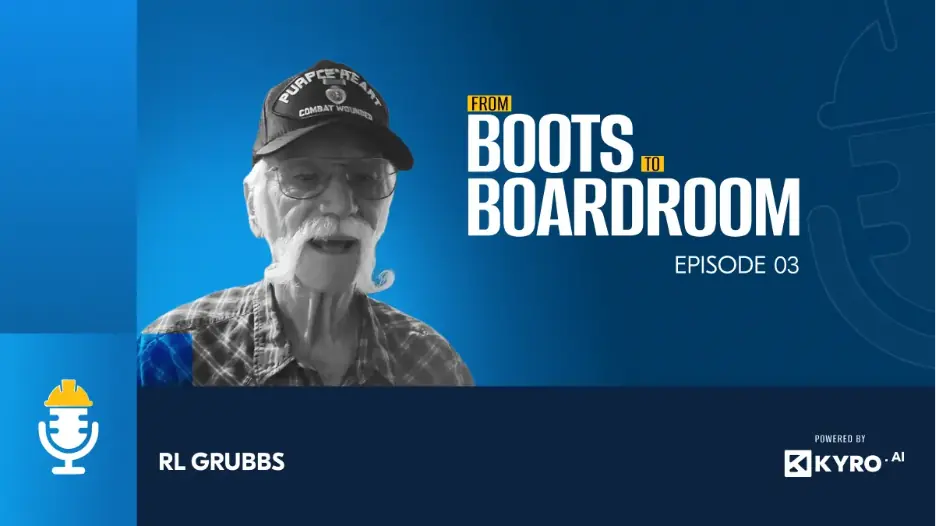
For deeper insights on utility safety leadership and the future of workforce protection, watch the full episode of From Boots to Boardroom here