Health & Safety
Build a safety culture that follows crews from office to field.
KYRO's Health & Safety tools digitize every safety workflow — from pre-job briefings to incident documentation — so nothing falls through the cracks between the trailer and the tower.







The Safety Documentation Problem
Paper safety forms lost before they're filed
No visibility into which crews completed safety briefings
Drug test and MVR records managed in spreadsheets
OSHA compliance gaps discovered at audit, not before
Credential expirations missed until a crew is already deployed

Transform how you manage project files with centralized storage and real-time collaboration. KYRO ensures your files are secure, accessible, and ready whenever you need them.
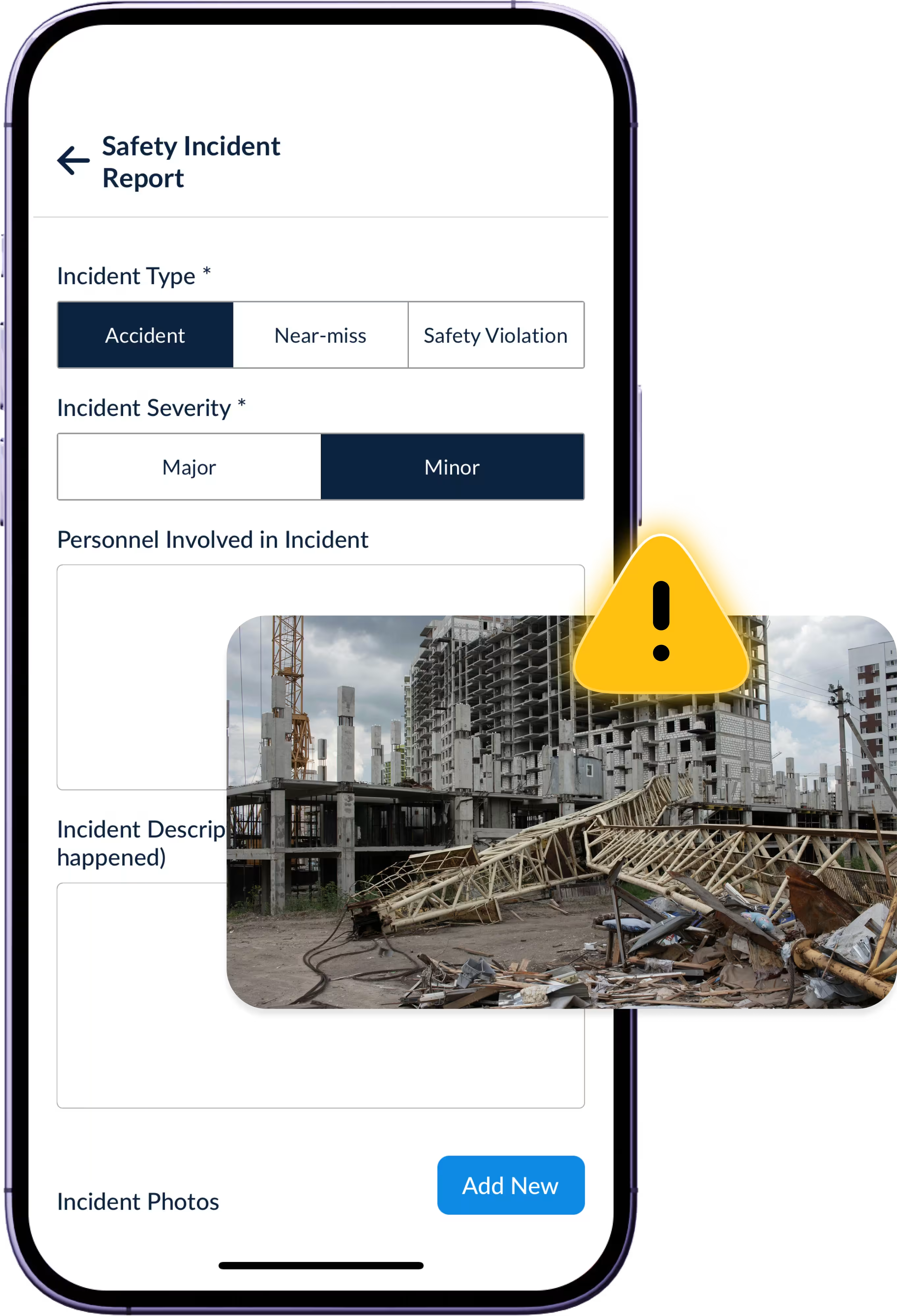
Safety Forms & Data Collection
Safety & Compliance Forms— Build and deploy digital safety forms for pre-job briefings, tailgate meetings, and incident reports.
Safety Data Collection— Capture safety data from the field in real time — GPS-tagged, timestamped, immediately visible to supervisors.
Forms Library Access— Pre-built library of OSHA-aligned safety forms your teams can deploy immediately.
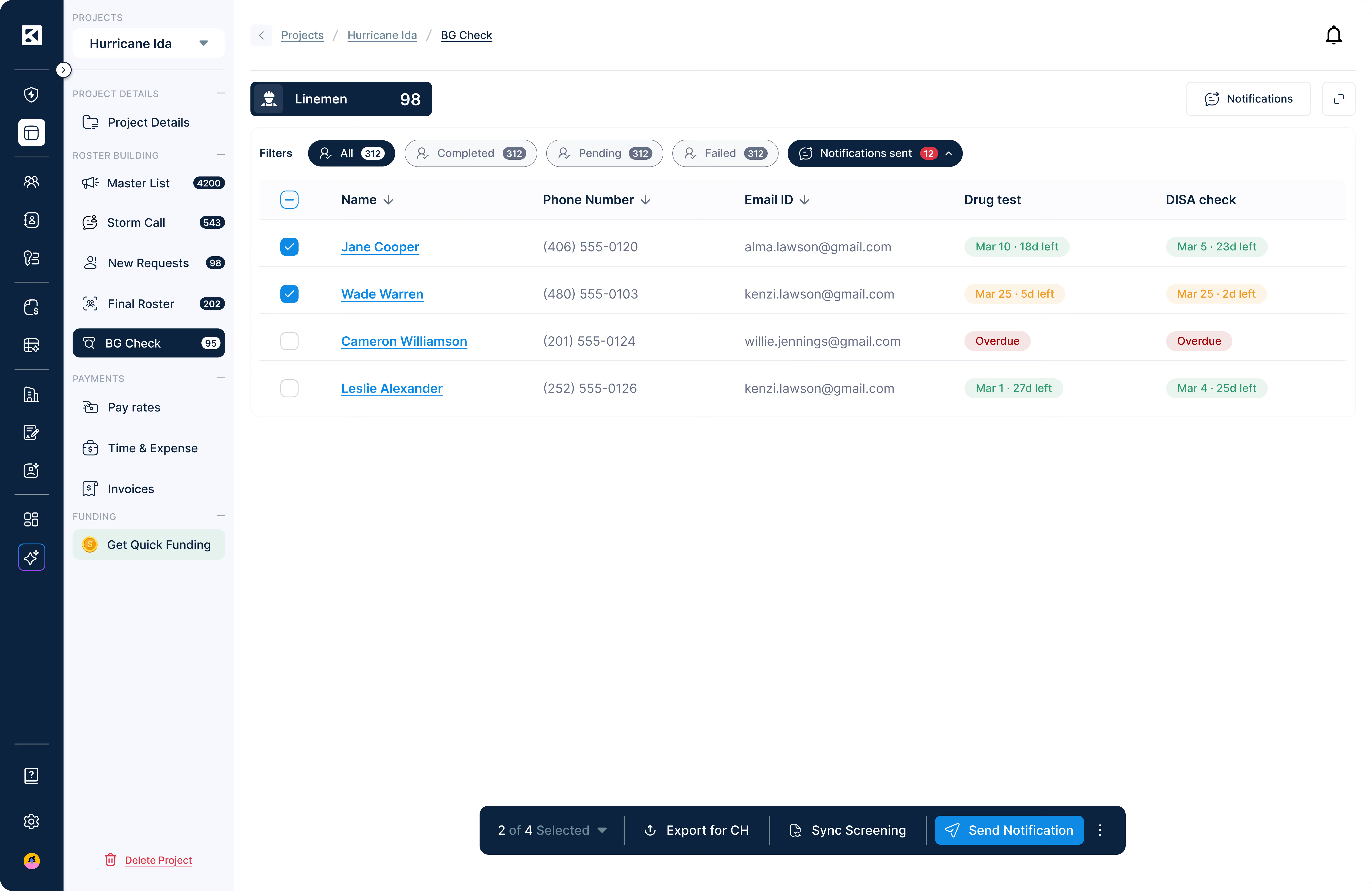
Drug Testing & Background Screening
FMCSA Drug & Alcohol Clearinghouse API— Direct integration with FMCSA's clearinghouse for CDL driver drug and alcohol violation checks.
SAMHSA-Certified Drug Testing— Coordinate pre-employment and random drug testing through SAMHSA-certified lab network.
Motor Vehicle Report (MVR)— Pull and store MVRs for every driver on your workforce — with automated renewal tracking.
Drug & Alcohol Testing Documentation— Centralize all testing documentation with audit-ready retrieval.

HR & Employment Compliance
I-9 Documentation & Compliance— Collect and store I-9s for every worker — with automated compliance alerts.
Employee Handbook Compliance— Issue handbooks, track acknowledgment, and store signed copies per employee.
California Labor Law Compliance— KYRO handles California-specific labor law requirements for contractors operating in the state.
Payroll Data Collection for Direct Deposit— Collect W-4s, direct deposit authorizations, and payroll setup data through the onboarding flow.
The KYRO impact
Measurable results across major utilities and vendors.
Zero
Lost compliance documents
Automated
Credential expiry alerts at 60/30/7 days
FAQ's
Does KYRO include pre-built safety forms or do we have to build everything from scratch?
Both. KYRO includes a library of pre-built OSHA-aligned safety forms — pre-job briefings, tailgate meetings, incident reports — that you can deploy immediately. You can also build custom forms specific to your operations, or use PDF fillable forms for teams that prefer familiar formats.
How does KYRO handle drug testing and background screening coordination, including DISA?
KYRO integrates directly with FMCSA's Drug & Alcohol Clearinghouse for CDL driver checks, coordinates SAMHSA-certified drug testing, and integrates with DISA for background screening. Before KYRO, many customers spent nearly 20 minutes per employee manually submitting roster information to DISA. With KYRO, it's one click and two seconds for the entire roster — regardless of size.
If a crew member's certification expires, who gets notified?
Both the worker and the dispatcher receive automated alerts at 60, 30, and 7 days before expiration — so renewals happen on the worker's timeline, not at the assembly gate during mobilization.
Do we have to switch away from our existing HR or compliance tools to use KYRO's Health & Safety features?
No. KYRO works alongside your existing HR and compliance systems — our APIs are free, so KYRO connects to the tools you're already using. Most customers start with KYRO's safety forms and drug testing coordination, then consolidate further as they see how much manual work KYRO eliminates.