Every storm. Every crew. Every dollar. In one place.
StormShield is KYRO's flagship storm command module — built for utilities, prime contractors, and brokers who can't afford to lose a minute when a storm hits.
No commitment. No implementation fee. Unlimited users. Cancel anytime.
Why major utilities and vendors trust KYRO AI
Built by the founder who scaled a 400-person Utility Service Provider across 14 states and earned Great Place to Work six times doing it. Built for the field. Backed by the balance sheet.
The Storm Operations Problem
Rosters built in Excel, updated via text thread
Linemen re-onboarding paperwork for every event
Invoices compiled manually from handwritten timesheets
No real-time visibility into crew location or ETA
Utilities waiting 90+ days for verified documentation
Storm Command & Coordination
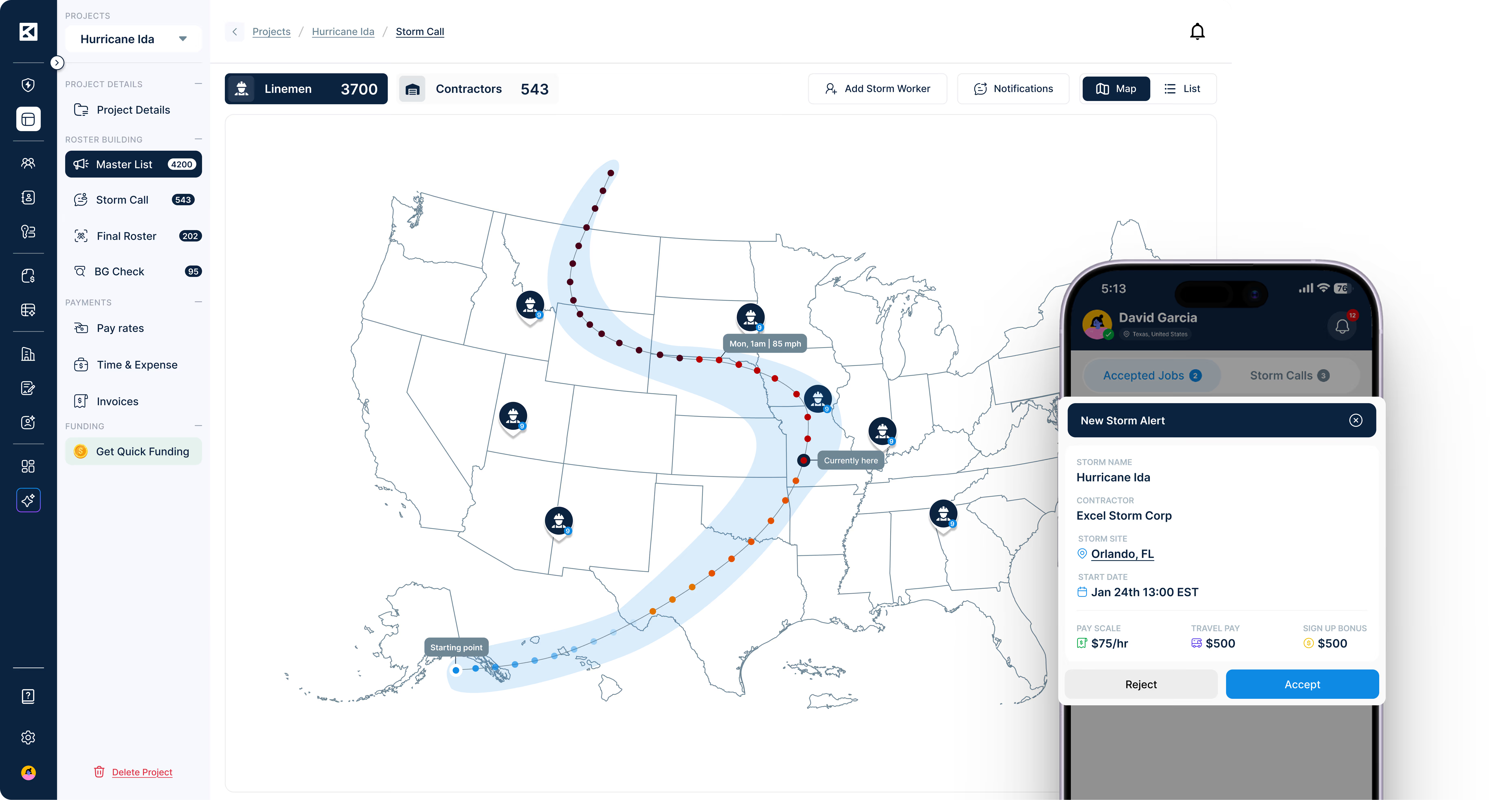
Parallel Storm Calls— Manage multiple simultaneous storm events with independent call structures, rosters, and timelines.
Clone Roster from Prior Event— Instantly pre-populate rosters from previous storms. No re-onboarding your trusted crews from scratch.
Blue Sky Capacity Planning— Build and maintain your contractor and lineman bench before a storm hits.
Cascading Storm Call Broadcasts— Push a storm call across your entire multi-tier subcontractor network in a single action.
Interactive ArcGIS Storm Maps— Real-time storm tracking overlaid with crew location, territory lines, and assembly points.
Roster Building & Crew Formation
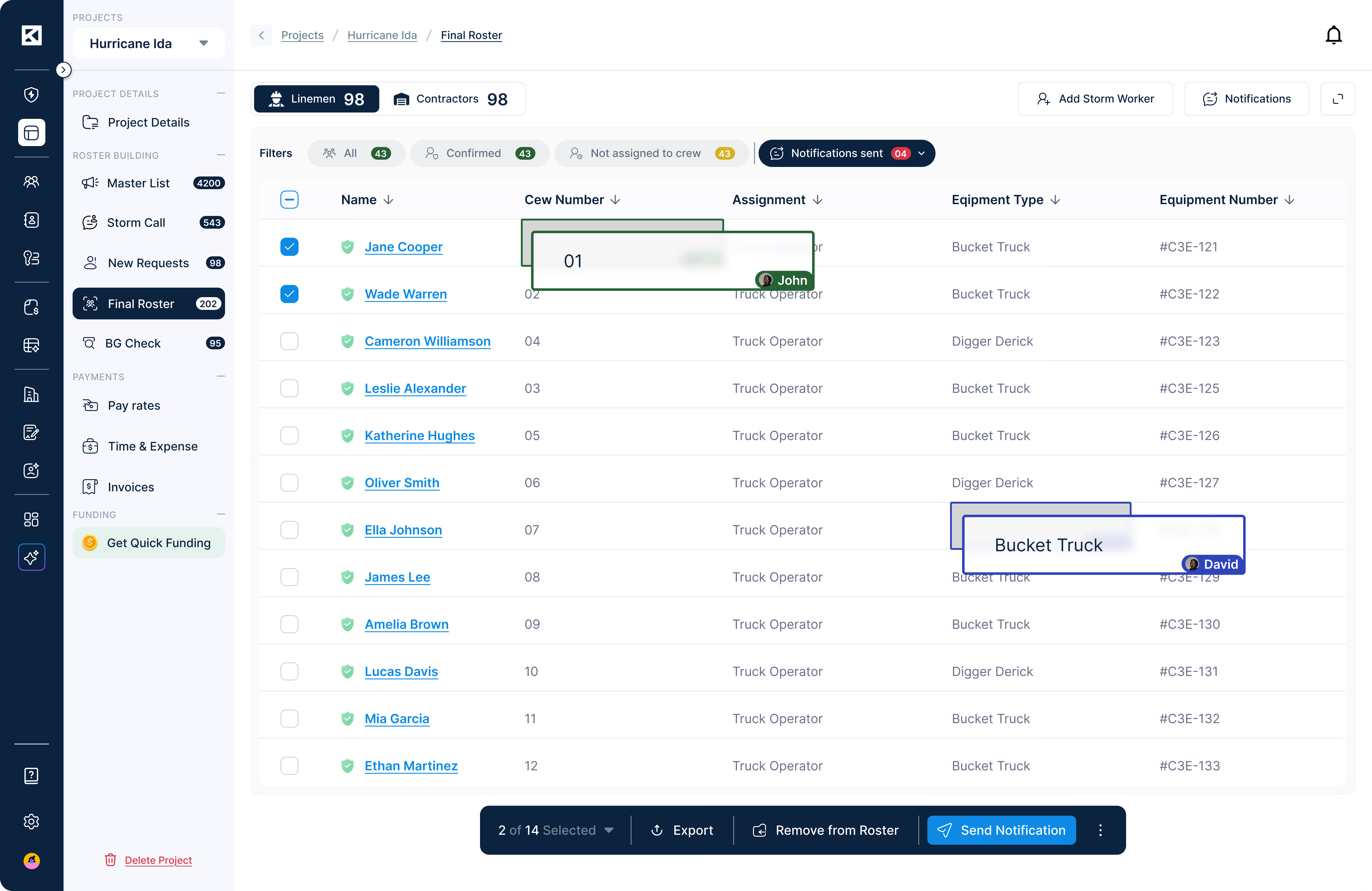
Real-Time Shared Roster— Multiple dispatchers and PMs build the same roster simultaneously — no version conflicts.
Build by Crew Size, Title, or Equipment— Configure crew templates with defined GF/JL/Apprentice ratios and utility-specific requirements.
Live Crew Count & Status— See confirmed, pending, and declined responses in real time as storm calls go out.
Subcontractor Roll-Up Visibility— See every sub's roster status and crew count from a single view without chasing phone calls.
Assembly & Field Mobilization
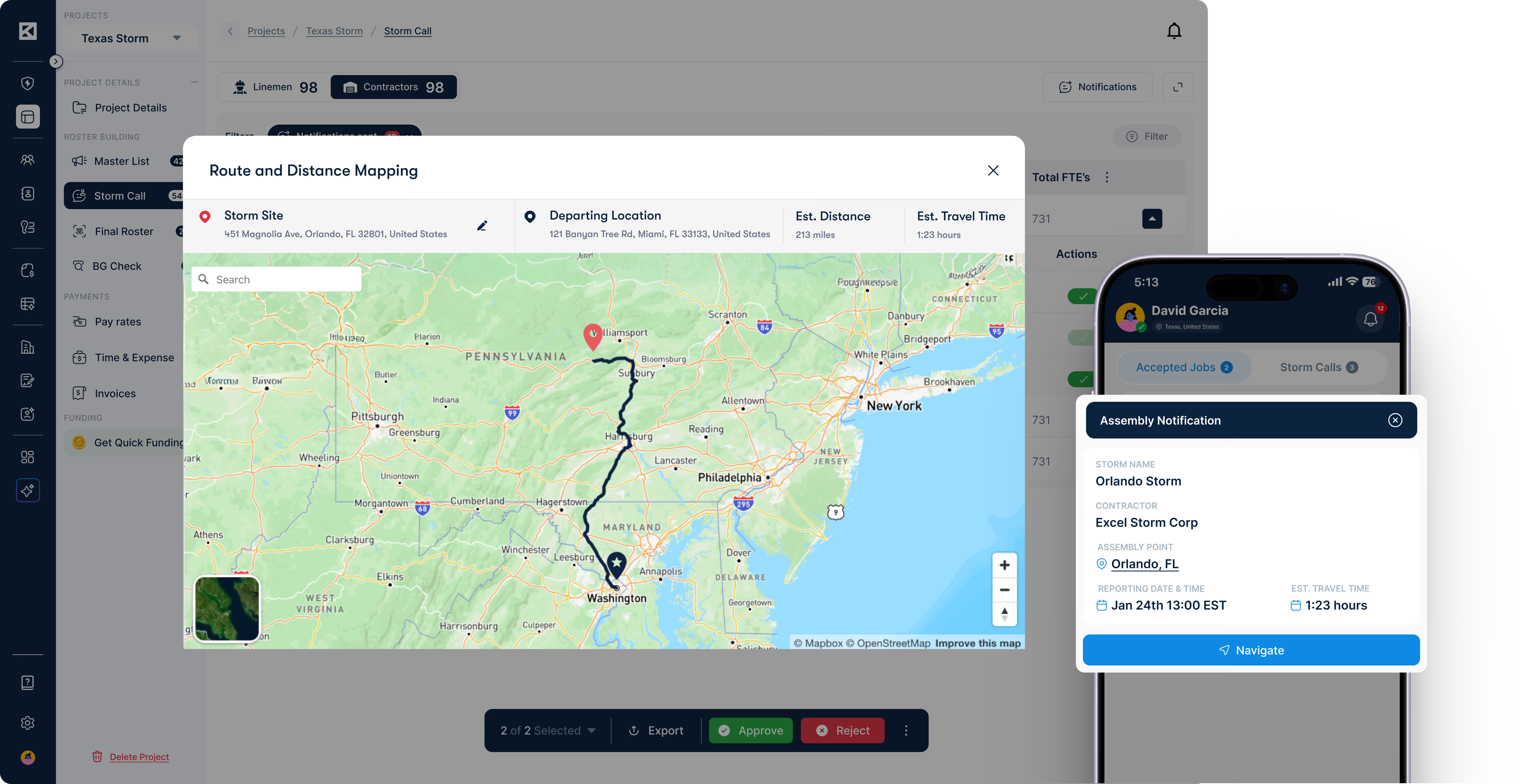
Assembly Notification System— Send confirmed linemen assembly point coordinates, required report time, and travel routing automatically.
Real-Time Geolocation Tracking— Poll live GPS positions of mobilized linemen and compute ETA to assembly point.
Location-Based Lineman Callout— Surface the closest credentialed linemen to a given assembly point using geographic proximity scoring.
Post-Storm Submissions & Invoicing
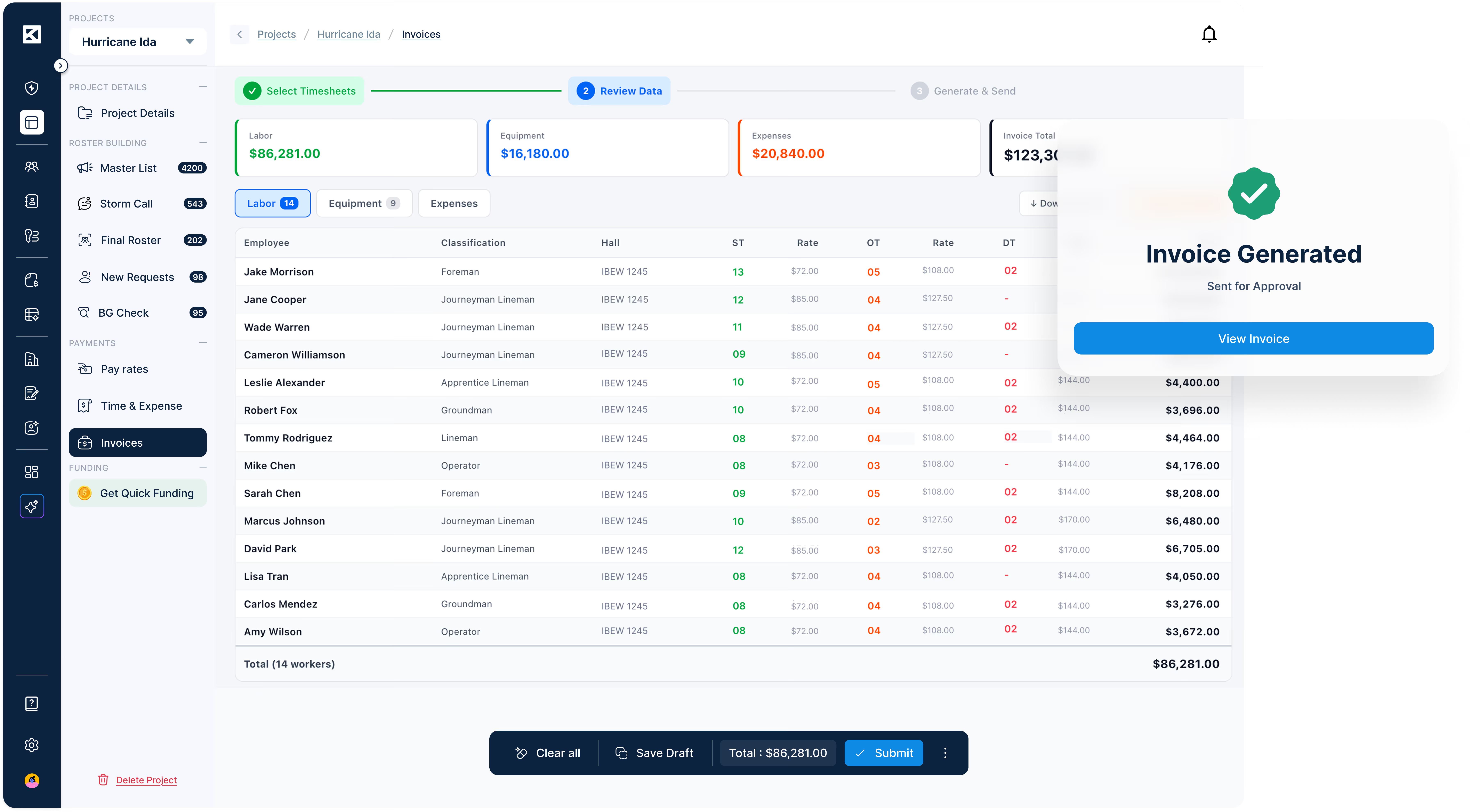
Crew, Kiosk & Individual Timesheets— Flexible timesheet collection for every crew structure — with GPS verification baked in.
AI Timesheet & Equipment Accuracy Check— KORY AI validates submitted timesheets against rate cards and equipment allocations before invoicing.
Invoice Generation from Templates— Create utility-ready invoices directly from verified timesheet and expense data — zero re-entry.
End-to-End Audit Trail— Every action from roster to invoice is timestamped and traceable for utility compliance reporting.
Coming Soon Features
IBEW jurisdictional analysis engine
Multi-factor eligibility scoring
Ranked candidate list generation
Crew composition optimization algorithm
The KYRO impact
Measurable results across major utilities and vendors.
Do we have to re-onboard our contractors and linemen for every storm event?
No. KYRO Verified stores every credential, classification, and compliance document permanently. When a storm call goes out, your roster draws from verified profiles already in the system — no re-paperwork, no re-onboarding.
Can we manage multiple storms happening at the same time?
Yes. StormShield supports parallel storm calls with independent rosters, timelines, and crew structures running simultaneously — each fully visible from a single dashboard.
How does StormShield handle subcontractors and brokers, not just our direct workforce?
StormShield is built for multi-tier networks. Storm call broadcasts cascade automatically through your entire sub network, with real-time response tracking, roll-up roster visibility, and consolidated invoicing at every tier.
Does KYRO support both union and non-union linemen and work?
Yes. KYRO is built for the full spectrum of storm restoration workforce — IBEW union linemen, non-union crews, and mixed workforces. IBEW classification verification, union card validation, and jurisdictional compliance are built in for union work. Non-union crews follow the same credential and compliance workflow without the union-specific fields. The same roster, the same platform, regardless of workforce type.
Is the 1.3 multiplier for time to mobilize to storm and/or project location adjustable?
Yes, the time multiplier to mobilize to storm or project location is fully customizable. The 1.3 default can be modified to match your project-specific requirements or regional standards. Some of our customers use a multiplier of 1.4 or 1.5 to allow more time for equipment to travel from their then current location to the storm and/or project location.
See StormShield in action. One live webinar. $500/month to get started.
No commitment. No implementation fee. Unlimited users. Cancel anytime.
We use cookies to understand how people use our site and to improve it. You can accept or reject them, or choose which ones we use. Read our Privacy Policy.
Cookie preferences
Choose which cookies we can use. You can change this at any time from Cookie settings in the footer.