Bridging the field-to-office gap

Utility Digital Transformation: Closing the Field-to-Office Gap for Accountability and Operational Excellence

November 27, 2025
3 min read

The utility industry's foundation rests on its field personnel—the linemen, technicians, and project coordinators. However, a major challenge continues to slow utilities down: the Field-to-Office Gap.

This gap appears when the work completed on poles, substations, and equipment doesn't make its way back to the office quickly or accurately enough to support financial decisions, project oversight, and operational planning.

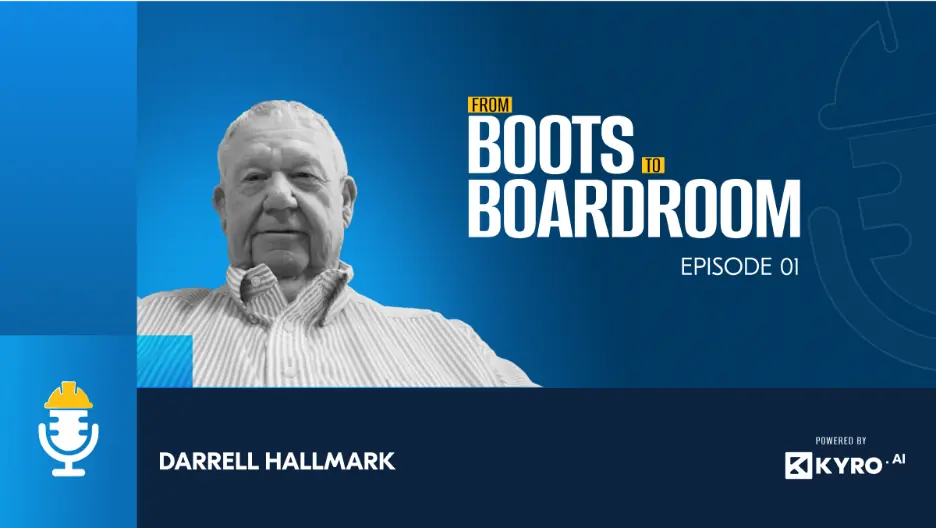
In the debut episode of the KYRO AI podcast, From Boots to Boardroom, industry veteran Darrell Hallmark shares what he learned during his 54-year career. His insights show how leadership, accountability, and field-first digital tools can finally close this long-standing gap—and unlock real utility operational excellence.  

1. Digital Field Documentation: The Core of Utility Accountability

For utilities to protect margins and maintain regulatory compliance, every action taken in the field must be documented in real time—not days or weeks later. Paper forms create delays, cause data loss, and leave revenue on the table due to undocumented labor, untracked equipment, and missed billables.

Hallmark, who worked his way from warehouse worker to Senior Vice President, is straightforward about the financial cost of outdated systems. He highlights why utilities must digitize field operations to maintain profitability.

As KYRO AI’s CEO, Hari Vasudevan, notes on the podcast, closing the Field-to-Office Gap became the foundation for KYRO AI’s mission:

“Those gaps that I saw over the last two decades—that’s why I started KYRO AI. To digitize the work so people can document what they do in the field.”

With digital field documentation, crews can record asset data, safety checks, equipment conditions, hazards, time entries, and completion reports instantly. This accuracy accelerates billing cycles, prevents reconciliation errors, and strengthens utility accountability for every project and work order.

2. Utility Operational Excellence Starts with Field-First Awareness

Digital platforms only succeed when field crews use them. That means software must fit the workflow and not the other way around.

Hallmark’s leadership philosophy is simple:

“The first thing you have to do is get out in the field and see what’s going on.”

He’s seen too many organizations fail because executives lead from the office instead of observing the problems that linemen and technicians deal with daily. If leadership doesn’t understand field constraints, adoption of Field Service Management tools becomes an uphill battle.

For utilities deploying digital platforms or storm response tools, a boots-on-the-ground mindset ensures that:

  • Workflows match real field conditions
  • Crews can complete tasks without extra steps
  • Supervisors gain visibility without disrupting productivity
  • Adoption rates increase naturally

This alignment is what drives true utility operational excellence.

3. Incentivizing Field Operations with Transparent, Real-Time Data

One of Hallmark’s most effective strategies during his career was tying crew performance directly to financial outcomes. His high-accountability bonus program required crews to maintain equipment, reduce waste, and avoid incidents—or the bonus was reduced.

As he puts it:

“If you blow a motor in a dozer, that’s coming out of your bonus. If you have a safety incident, you get no bonus.”

The impact was immediate. Field crews became responsible project managers because their decisions affected their pay—and the company’s bottom line.

Utility digital transformation amplifies this strategy by giving leaders:

  • Equipment condition reports
  • Production metrics
  • On-site progress validation
  • Margin visibility at a crew level

Digital tools make performance transparent, and when performance becomes visible, accountability becomes part of the culture.

Closing the Gap Is a Requirement—Not a Choice

The Field-to-Office Gap drains revenue, slows billing, creates safety blind spots, and prevents leaders from making informed decisions. Digital transformation isn’t about adopting new software. It’s about empowering field crews with tools that make their days easier and giving the office reliable data to run the business.

When utilities digitize field documentation, adopt field-first workflows, and connect field activity to financial outcomes, they gain the clarity needed to operate safer, faster, and more profitably.

This isn’t the future of utility operations. It's happening now and it’s the new baseline.

Want to close your Field-to-Office Gap?

See how KYRO AI helps utilities capture real-time field data, improve accountability, and give leaders the operational visibility needed to control costs and boost project profitability.

Book a KYRO AI walkthrough today.
You can find the full discussion on this topic here: http://www..com/watch?v=9lKwyecVZVw

Utility Digital Transformation: Closing the Field-to-Office Gap for Accountability and Operational Excellence

November 27, 2025
3 min read

The utility industry's foundation rests on its field personnel—the linemen, technicians, and project coordinators. However, a major challenge continues to slow utilities down: the Field-to-Office Gap.

This gap appears when the work completed on poles, substations, and equipment doesn't make its way back to the office quickly or accurately enough to support financial decisions, project oversight, and operational planning.

In the debut episode of the KYRO AI podcast, From Boots to Boardroom, industry veteran Darrell Hallmark shares what he learned during his 54-year career. His insights show how leadership, accountability, and field-first digital tools can finally close this long-standing gap—and unlock real utility operational excellence.  

1. Digital Field Documentation: The Core of Utility Accountability

For utilities to protect margins and maintain regulatory compliance, every action taken in the field must be documented in real time—not days or weeks later. Paper forms create delays, cause data loss, and leave revenue on the table due to undocumented labor, untracked equipment, and missed billables.

Hallmark, who worked his way from warehouse worker to Senior Vice President, is straightforward about the financial cost of outdated systems. He highlights why utilities must digitize field operations to maintain profitability.

As KYRO AI’s CEO, Hari Vasudevan, notes on the podcast, closing the Field-to-Office Gap became the foundation for KYRO AI’s mission:

“Those gaps that I saw over the last two decades—that’s why I started KYRO AI. To digitize the work so people can document what they do in the field.”

With digital field documentation, crews can record asset data, safety checks, equipment conditions, hazards, time entries, and completion reports instantly. This accuracy accelerates billing cycles, prevents reconciliation errors, and strengthens utility accountability for every project and work order.

2. Utility Operational Excellence Starts with Field-First Awareness

Digital platforms only succeed when field crews use them. That means software must fit the workflow and not the other way around.

Hallmark’s leadership philosophy is simple:

“The first thing you have to do is get out in the field and see what’s going on.”

He’s seen too many organizations fail because executives lead from the office instead of observing the problems that linemen and technicians deal with daily. If leadership doesn’t understand field constraints, adoption of Field Service Management tools becomes an uphill battle.

For utilities deploying digital platforms or storm response tools, a boots-on-the-ground mindset ensures that:

  • Workflows match real field conditions
  • Crews can complete tasks without extra steps
  • Supervisors gain visibility without disrupting productivity
  • Adoption rates increase naturally

This alignment is what drives true utility operational excellence.

3. Incentivizing Field Operations with Transparent, Real-Time Data

One of Hallmark’s most effective strategies during his career was tying crew performance directly to financial outcomes. His high-accountability bonus program required crews to maintain equipment, reduce waste, and avoid incidents—or the bonus was reduced.

As he puts it:

“If you blow a motor in a dozer, that’s coming out of your bonus. If you have a safety incident, you get no bonus.”

The impact was immediate. Field crews became responsible project managers because their decisions affected their pay—and the company’s bottom line.

Utility digital transformation amplifies this strategy by giving leaders:

  • Equipment condition reports
  • Production metrics
  • On-site progress validation
  • Margin visibility at a crew level

Digital tools make performance transparent, and when performance becomes visible, accountability becomes part of the culture.

Closing the Gap Is a Requirement—Not a Choice

The Field-to-Office Gap drains revenue, slows billing, creates safety blind spots, and prevents leaders from making informed decisions. Digital transformation isn’t about adopting new software. It’s about empowering field crews with tools that make their days easier and giving the office reliable data to run the business.

When utilities digitize field documentation, adopt field-first workflows, and connect field activity to financial outcomes, they gain the clarity needed to operate safer, faster, and more profitably.

This isn’t the future of utility operations. It's happening now and it’s the new baseline.

Want to close your Field-to-Office Gap?

See how KYRO AI helps utilities capture real-time field data, improve accountability, and give leaders the operational visibility needed to control costs and boost project profitability.

Book a KYRO AI walkthrough today.

You can find the full discussion on this topic here: http://www..com/watch?v=9lKwyecVZVw