
Features
Industries
Who we serve
Resources
Sign in
Get Started - $500/month
No commitment. No implementation fee. Unlimited users. Cancel anytime
-1600.webp)
The utility industry is entering a defining moment. On one side, we have the Smart Grid, the AI-driven load forecasting, digital twins, automation, and a rapidly expanding ecosystem of intelligent devices. On the other side, we have the real grid, with physical wires, relays, transformers, and substations that follow physics, not algorithms.
As utilities adopt AI to manage aging infrastructure, electrification, and extreme weather, a critical question is emerging:
Are we creating a generation of engineers who can operate advanced systems… but no longer understand them?
In a recent episode of From Boots to Boardroom, retired Director at CenterPoint Energy, Reggie Comfort broke down what he calls the AI Paradox:
“The smarter our grids become, the more dangerous it is to lose our fundamental engineering knowledge.”
To understand AI in utilities, we must start with where automation began. Reggie Comfort, a utility veteran, who spent more than 40 years as a relay engineer, explains that AI is an extension of protective relaying logic which is just faster and more complex.
As the grid faces EV load growth, DER integration, and record-breaking storms, utilities need the speed and scale that AI delivers.
But speed without understanding is where the risk begins!
This is the heart of the AI Paradox. If an AI model recommends a switching action, and an operator doesn’t know why, do they still have control? Comfort sees a troubling trend among new engineers who treat digital tools as shortcuts rather than tools that require context.
“A lot of young people don’t want to take the time to learn the fundamentals… If you don’t have time to learn it, how are you going to effectively apply it?” — Reggie Comfort
The danger isn’t AI itself. It’s the blind trust.
AI should accelerate decisions and not replace basic understanding.
Studies from the Electric Power Research Institute (EPRI) show that AI models often generate false alarms that require expert interpretation. Without human validation, utilities risk unnecessary spending or worse, unsafe decisions.
Comfort stresses that systems must be programmed by people who understand the physics of the grid:
“It takes a person to understand the system before they establish the rules the machine will use. If you try to use AI before understanding it, you’re going to misapply a scheme.”
This is why workforce development and engineering mentorship are becoming as important as grid modernization.
The solution is not abandoning AI. It’s grounding it in operational reality and starting it all from the basics.
Thousands of relay technicians, operators, and field engineers are retiring. Their logic and experience must become the foundation of AI models and not an afterthought. Because they’ve been there in the field and dealt with the grids firsthand.
Decisions can't be taken by solely relying on AI outputs. The AI outputs should be validated by engineers who understand protection schemes, load behavior, and switching impacts.
Comfort summarizes this perfectly:
“You operate it like you design it, and you design it like you operate it.”
This principle is critical for AI development. If models are built by people who have never operated a feeder, they will miss the nuances that matter during storms, faults, and emergencies.
AI will reshape everything from outage management to distribution planning. But only if engineers maintain a solid footing in the physics of the system.
The paradox isn’t that AI is dangerous. The paradox is that AI amplifies the danger of weak fundamentals. And smart grids can’t survive without smart engineers.
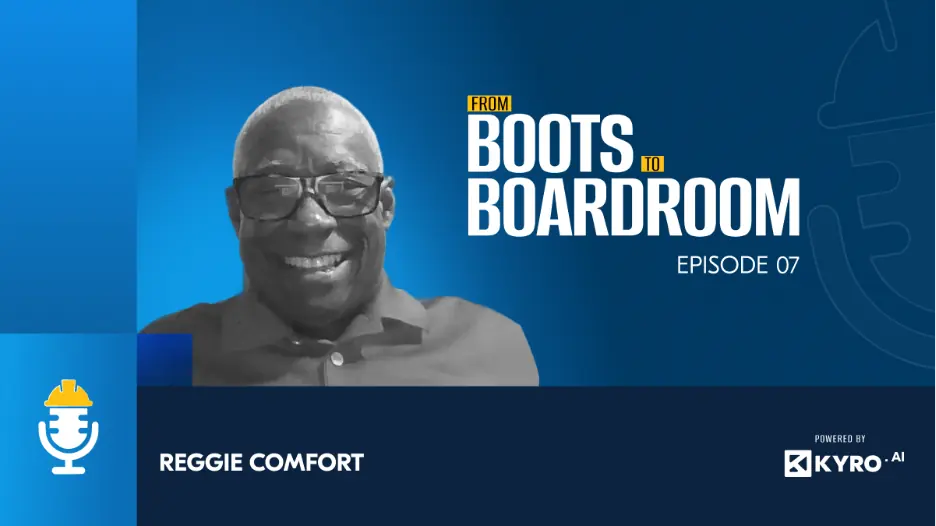
For more insights on the intersection of AI, engineering fundamentals, and utility workforce culture, listen to the full episode of From Boots to Boardroom featuring Reggie Comfort.