
Features
Industries
Who we serve
Resources
Sign in
Get Started - $500/month
No commitment. No implementation fee. Unlimited users. Cancel anytime
-1600.webp)
As the utility industry continues to evolve, with growing demand, aging infrastructure, and increased pressure on service quality, one factor stands out as critical for success: how do you motivate your contract crews.
Traditional fixed-rate or day-rate contracts often fail to align crew behavior with the company’s long-term outcomes. That’s where profit-sharing and performance incentives come in. A shift that can transform contract crews into invested teams, driving efficiency, accountability, and shared success.
Under legacy contracting models, crews are usually paid fixed daily or hourly rates. While predictable, these models share three key drawbacks:
For utility work, where safety, reliability, timeliness, and cost control all matters, these limitations can lead to inefficiency, mistakes, and fractured accountability.
By contrast, an incentive-based or profit-sharing contract aligns the contractor’s success with the utility’s success.
According to research and industry practice:
Essentially: when contractors know their compensation depends not just on hours but on results, they act more like partners and not just hired hands.
Implementing profit-sharing and performance incentives for crews delivers benefits on multiple fronts:
In industries beyond utilities, for example, construction contractors who adopt performance-based pay report higher crew output and better engagement.
To get it right, incentive-based or profit-sharing contracts must be well-designed. Here’s how:
Like any contract model, incentive-based agreements come with risks. But they can be managed if designed carefully:
To mitigate these, utilities should ensure that they balance performance criteria, allowances for unexpected external factors, and the audit mechanisms.
As demand on utilities grows through storms, accelerating infrastructure upgrades, distributed energy integration, and workforce attrition are needed. They need contract crews who think long-term, who care about safety, quality, and client reputation.
Incentive-aligned contracting:
For most utilities, the choice isn’t between “contract or in-house.” The distinction will be between contractors who are truly aligned, and contractors who aren’t.
Profit-sharing and performance incentives are business frameworks for trust, accountability, and shared success. In a world where grid reliability, storm response, and operational excellence are non-negotiable, aligned incentives ensure every hour, every crew, and every work order counts.
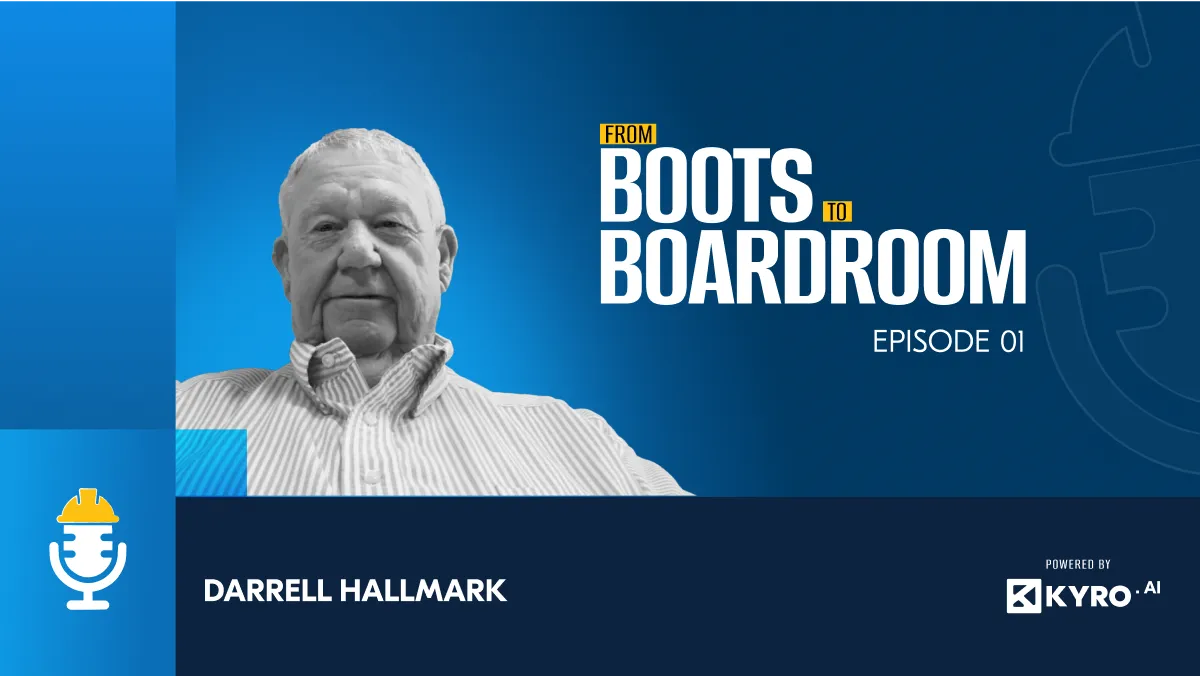
In the first episode of From Boots to Boardroom, Darrell Hallmark brushes upon this topic. Listen to the full conversation about utility leadership here.