Five Leadership Lessons from Brian McFarlin: 40 Years in the Utility Industry

December 17, 2025
3 min read

Leadership in the utility industry isn’t built in boardrooms alone. It’s forged in the field—through storms worked, outages restored, bids lost and won, and years of decisions made under pressure.

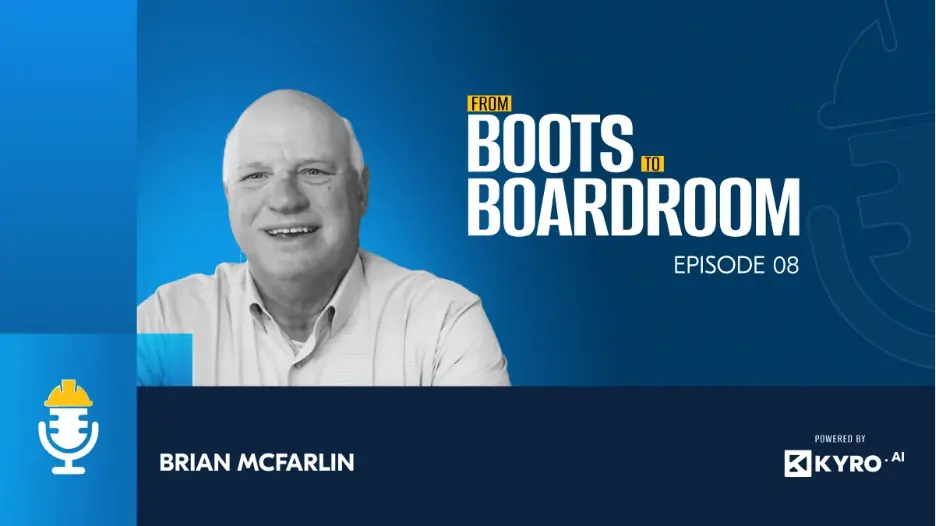
This article distills five leadership lessons drawn from – From Boots to Boardroom podcast, featuring Brian McFarlin, whose 40-year career across utility operations, consulting, and executive leadership offers a practical view of what it takes to lead at scale.  

These lessons are especially relevant today, as utilities and storm-response organizations navigate increasing operational complexity, regulatory scrutiny, and climate-driven disruption.

The Foundation: Where Utility Leadership Really Begins

Strong utility leadership often grows from blue-collar roots, where work ethics, accountability, and relationships matter more than titles.  

In tight-knit communities, credibility is earned, not claimed, teaching leaders to observe before acting. Early exposure to utility work, long careers in storm response, and decades of service instill respect for the responsibility of keeping the grid and customers safe.  

This perspective shapes leaders who take their work seriously and lead with trust and consistency.

Lesson 1: Quiet Competitiveness Wins More Than Loud Leadership

One of the most powerful leadership metaphors shared by Brian McFarlin, was the idea of being a “duck on the pond.” Calm on the surface, relentless underneath.

Great utility leaders don’t always broadcast their ambitions. They stay composed in meetings, measured in crisis, but behind the scenes, they’re pushing hard to win bids, outperform benchmarks, and raise the bar.

As one excerpt from the conversation put it:

“I don’t like to lose… when we don’t get a bid, it still bothers me.”

That understated competitiveness matters in utilities, where emotional control is critical—but so is the internal drive to improve outcomes, reliability, and performance year after year.

Lesson 2: Seek to Understand Before Trying to Be Right

Utilities operate in complex ecosystems. Regulators, contractors, mutual-aid partners, municipalities, and customers all bring different priorities. Leaders who by default claim to being right often fail. Leaders who aim to understand first build long-term trust.

The strongest leaders intentionally seek win-win outcomes by asking:

  • What problem is the other side trying to solve?
  • What constraints are they operating under?
  • Where’s the overlap between our goals?

This mindset shifts leadership from command-and-control to collaboration. It’s especially critical during storm response, vendor negotiations, and cross-functional initiatives, where alignment matters more than authority.

Lesson 3: Execution Is Leadership

The utility industry is full of good ideas. New processes, new technologies, new operating models. But leadership isn’t about ideas. It’s about getting things finished.

One insight from years in consulting was blunt and accurate: The road to success is littered with great strategies that never got implemented.

Execution requires persistence. It means pushing initiatives forward even when momentum fades, priorities shift, or resistance appears. Sometimes leadership looks less like inspiration and more like determination, where you’re dragging the initiative across the finish line if needed.

In utilities, where scale and complexity slow everything down, execution discipline is often the difference between progress and stagnation.

Lesson 4: Make the Decisions and Own It

Unlike schools, the utility industry doesn’t provide clear answers. Leaders operate with incomplete data, time pressure, and real consequences.

The most effective leaders understand this reality and still act.

They make the best decision possible with the information available, commit to it, and move forward, without endless second-guessing. When outcomes aren’t perfect, they learn and adjust rather than freeze or deflect responsibility.

This ability is especially critical during storm events, safety decisions, and operational trade-offs, where hesitation can be more damaging than an imperfect call.

Lesson 5: Strong Leaders Create Ladders for Others

One of the most overlooked aspects of leadership is who you help along the way.

Experienced utility leaders have an influence. Access to rooms, conversations, and opportunities that newcomers don’t have. Using that influence intentionally can change careers, companies, and even the industry.

McFarlin shared a simple but powerful example: helping an early-stage entrepreneur get their first serious meeting inside a major utility. That single introduction unlocked opportunity and momentum that would have otherwise taken years.

Entrepreneurs and innovators drive much of the progress in utilities today. Leaders who recognize this and offer a fair shot rather than a closed door help the entire ecosystem move forward.

Why These Leadership Lessons Matter Now

Utilities are under more pressure than ever:

  • Extreme weather events
  • Aging infrastructure
  • Workforce shortages
  • Rising customer expectations
  • Increased regulatory scrutiny

Technology alone won’t solve these challenges. Platforms, data, and automation matter, but leadership determines whether they succeed. The leaders who will carry utilities forward are the ones who:

  • Compete quietly but relentlessly
  • Seek understanding before authority
  • Execute, not just strategize
  • Decide under uncertainty
  • And lift others as they rise

Those traits aren’t trendy. But they’re proven across decades of real utility work.
If you’d like to explore these insights in more depth, listen to the full podcast episode here.  

Five Leadership Lessons from Brian McFarlin: 40 Years in the Utility Industry

December 17, 2025
3 min read

Leadership in the utility industry isn’t built in boardrooms alone. It’s forged in the field—through storms worked, outages restored, bids lost and won, and years of decisions made under pressure.

This article distills five leadership lessons drawn from – From Boots to Boardroom podcast, featuring Brian McFarlin, whose 40-year career across utility operations, consulting, and executive leadership offers a practical view of what it takes to lead at scale.  

These lessons are especially relevant today, as utilities and storm-response organizations navigate increasing operational complexity, regulatory scrutiny, and climate-driven disruption.

The Foundation: Where Utility Leadership Really Begins

Strong utility leadership often grows from blue-collar roots, where work ethics, accountability, and relationships matter more than titles.  

In tight-knit communities, credibility is earned, not claimed, teaching leaders to observe before acting. Early exposure to utility work, long careers in storm response, and decades of service instill respect for the responsibility of keeping the grid and customers safe.  

This perspective shapes leaders who take their work seriously and lead with trust and consistency.

Lesson 1: Quiet Competitiveness Wins More Than Loud Leadership

One of the most powerful leadership metaphors shared by Brian McFarlin, was the idea of being a “duck on the pond.” Calm on the surface, relentless underneath.

Great utility leaders don’t always broadcast their ambitions. They stay composed in meetings, measured in crisis, but behind the scenes, they’re pushing hard to win bids, outperform benchmarks, and raise the bar.

As one excerpt from the conversation put it:

“I don’t like to lose… when we don’t get a bid, it still bothers me.”

That understated competitiveness matters in utilities, where emotional control is critical—but so is the internal drive to improve outcomes, reliability, and performance year after year.

Lesson 2: Seek to Understand Before Trying to Be Right

Utilities operate in complex ecosystems. Regulators, contractors, mutual-aid partners, municipalities, and customers all bring different priorities. Leaders who by default claim to being right often fail. Leaders who aim to understand first build long-term trust.

The strongest leaders intentionally seek win-win outcomes by asking:

  • What problem is the other side trying to solve?
  • What constraints are they operating under?
  • Where’s the overlap between our goals?

This mindset shifts leadership from command-and-control to collaboration. It’s especially critical during storm response, vendor negotiations, and cross-functional initiatives, where alignment matters more than authority.

Lesson 3: Execution Is Leadership

The utility industry is full of good ideas. New processes, new technologies, new operating models. But leadership isn’t about ideas. It’s about getting things finished.

One insight from years in consulting was blunt and accurate: The road to success is littered with great strategies that never got implemented.

Execution requires persistence. It means pushing initiatives forward even when momentum fades, priorities shift, or resistance appears. Sometimes leadership looks less like inspiration and more like determination, where you’re dragging the initiative across the finish line if needed.

In utilities, where scale and complexity slow everything down, execution discipline is often the difference between progress and stagnation.

Lesson 4: Make the Decisions and Own It

Unlike schools, the utility industry doesn’t provide clear answers. Leaders operate with incomplete data, time pressure, and real consequences.

The most effective leaders understand this reality and still act.

They make the best decision possible with the information available, commit to it, and move forward, without endless second-guessing. When outcomes aren’t perfect, they learn and adjust rather than freeze or deflect responsibility.

This ability is especially critical during storm events, safety decisions, and operational trade-offs, where hesitation can be more damaging than an imperfect call.

Lesson 5: Strong Leaders Create Ladders for Others

One of the most overlooked aspects of leadership is who you help along the way.

Experienced utility leaders have an influence. Access to rooms, conversations, and opportunities that newcomers don’t have. Using that influence intentionally can change careers, companies, and even the industry.

McFarlin shared a simple but powerful example: helping an early-stage entrepreneur get their first serious meeting inside a major utility. That single introduction unlocked opportunity and momentum that would have otherwise taken years.

Entrepreneurs and innovators drive much of the progress in utilities today. Leaders who recognize this and offer a fair shot rather than a closed door help the entire ecosystem move forward.

Why These Leadership Lessons Matter Now

Utilities are under more pressure than ever:

  • Extreme weather events
  • Aging infrastructure
  • Workforce shortages
  • Rising customer expectations
  • Increased regulatory scrutiny

Technology alone won’t solve these challenges. Platforms, data, and automation matter, but leadership determines whether they succeed. The leaders who will carry utilities forward are the ones who:

  • Compete quietly but relentlessly
  • Seek understanding before authority
  • Execute, not just strategize
  • Decide under uncertainty
  • And lift others as they rise

Those traits aren’t trendy. But they’re proven across decades of real utility work.

If you’d like to explore these insights in more depth, listen to the full podcast episode here.