
.jpg)
Copyright © 2025 by T&D World. All rights reserved. This article first appeared in August 2025 on T&D World.
With increasing frequency and cost of weather disasters, utilities are turning to AI to enhance asset inspection, resource allocation, and decision-making, fostering a more resilient and affordable power grid while maintaining traditional practices.
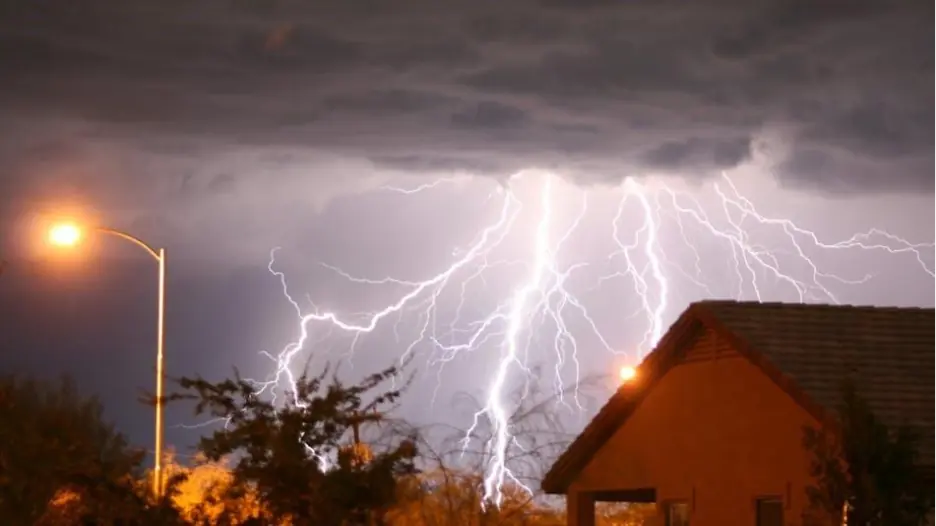
Storm costs pile up to eye-watering amounts after each devastating event, hitting utilities with upwards of billions of dollars of bills. Between 1980 and 2024, a total of 403 billion-dollar weather disasters cost the U.S. a staggering $2,917.50 billion (CPI-Adjusted).
Ratepayers feel the weight of these sky-high recovery costs. Utilities turn to them to help foot the bill, but that’s not a sustainable model for the long term. In 2022, U.S. industry debts from weather-related events reached $12.4 billion, a price customers will shoulder for decades.
The AI explosion and the data center buildout required to support it mean that millions of ratepayers are already paying more for electricity. The number of billion-dollar weather disasters is increasing every year, and the rate of increase in power bills is outpacing inflation, adding up to an untenable situation for utilities and ratepayers. In fact, one out of five ratepayers can’t pay their power bills.
Storm recovery costs don’t have to be so high. Rethinking storm response is a clear route to easing the financial strain on ratepayers and the wider industry. Technology, particularly AI, is integral to a more effective and efficient storm response. A tech-powered storm response that leverages AI, supported by every utility’s foundational programs that include asset inspection and vegetation management, will make the grid more resilient and affordable.
The aim is not to completely overhaul the system and replace entire existing processes with AI. Instead, the strongest approach is to augment traditional and trusted processes with technology to help reduce storm recovery costs and strengthen response for utilities and the communities they serve.
Leaning on manual input in storm response has created expensive challenges in the following areas:
These challenges are why utilities often turn to privately owned storm brokers, outsourcing managers to coordinate crew allocation, time and expense tracking, and finance contractors. Storm brokers offer short-term liquidity to line restoration crews and are helpful during peak storm seasons, but there’s a catch: Steep markups are often attached to their services.
Broker markups can be as high as 20 to 30% of storm recovery. If a storm’s recovery costs reach $1 billion, that’s an extra $200 to $300 million attached to the final bill. These costs are commonly settled in decades-long payment schedules that are passed on to ratepayers.
Now, in the age of AI, utilities need to quash ballooning debt and protect their customers from incurring further costs. Integrating technology to ease the manual and financial burdens of traditional methods lightens utilities’ reliance on storm brokers. That could shave at least tens, if not hundreds, of millions of dollars in broker fees, freeing up precious capital that can instead be invested in infrastructure projects to harden the grids ahead of future severe storm and disaster events.
AI can help drive operational efficiency and data tracking to take the pressure off human legwork. Picture an Uber-like platform for storm response, where utilities can track and connect resources according to impacted areas. AI tools are already aiding storm response by:
The caveat with strengthening storm response through AI is that there should be a blend of traditional methods and new technologies. These tools aren’t designed to replace people, but empower teams and overall processes to be more streamlined, efficient, and informed amid disaster.
Additionally, utilities must ensure human buy-in by training teams. Staff need to know how to work with these platforms. Sound data governance frameworks must also be established so AI functions reliably and is interoperable with existing systems.
It’s not about ‘less manpower’ but ‘smarter manpower.’ The industry has a duty to its ratepayers to ensure their storm response is robust, efficient, and as fiscally responsible as possible. This AI-forward approach that balances tradition and innovation could simplify resource allocation, dramatically reduce broker-induced markup costs, and enhance transparency for ratepayers, regulators, and other involved stakeholders.
Link to the original article: here

Copyright © 2025 by T&D World. All rights reserved. This article first appeared in August 2025 on T&D World.
With increasing frequency and cost of weather disasters, utilities are turning to AI to enhance asset inspection, resource allocation, and decision-making, fostering a more resilient and affordable power grid while maintaining traditional practices.

Storm costs pile up to eye-watering amounts after each devastating event, hitting utilities with upwards of billions of dollars of bills. Between 1980 and 2024, a total of 403 billion-dollar weather disasters cost the U.S. a staggering $2,917.50 billion (CPI-Adjusted).
Ratepayers feel the weight of these sky-high recovery costs. Utilities turn to them to help foot the bill, but that’s not a sustainable model for the long term. In 2022, U.S. industry debts from weather-related events reached $12.4 billion, a price customers will shoulder for decades.
The AI explosion and the data center buildout required to support it mean that millions of ratepayers are already paying more for electricity. The number of billion-dollar weather disasters is increasing every year, and the rate of increase in power bills is outpacing inflation, adding up to an untenable situation for utilities and ratepayers. In fact, one out of five ratepayers can’t pay their power bills.
Storm recovery costs don’t have to be so high. Rethinking storm response is a clear route to easing the financial strain on ratepayers and the wider industry. Technology, particularly AI, is integral to a more effective and efficient storm response. A tech-powered storm response that leverages AI, supported by every utility’s foundational programs that include asset inspection and vegetation management, will make the grid more resilient and affordable.
The aim is not to completely overhaul the system and replace entire existing processes with AI. Instead, the strongest approach is to augment traditional and trusted processes with technology to help reduce storm recovery costs and strengthen response for utilities and the communities they serve.
Leaning on manual input in storm response has created expensive challenges in the following areas:
These challenges are why utilities often turn to privately owned storm brokers, outsourcing managers to coordinate crew allocation, time and expense tracking, and finance contractors. Storm brokers offer short-term liquidity to line restoration crews and are helpful during peak storm seasons, but there’s a catch: Steep markups are often attached to their services.
Broker markups can be as high as 20 to 30% of storm recovery. If a storm’s recovery costs reach $1 billion, that’s an extra $200 to $300 million attached to the final bill. These costs are commonly settled in decades-long payment schedules that are passed on to ratepayers.
Now, in the age of AI, utilities need to quash ballooning debt and protect their customers from incurring further costs. Integrating technology to ease the manual and financial burdens of traditional methods lightens utilities’ reliance on storm brokers. That could shave at least tens, if not hundreds, of millions of dollars in broker fees, freeing up precious capital that can instead be invested in infrastructure projects to harden the grids ahead of future severe storm and disaster events.
AI can help drive operational efficiency and data tracking to take the pressure off human legwork. Picture an Uber-like platform for storm response, where utilities can track and connect resources according to impacted areas. AI tools are already aiding storm response by:
The caveat with strengthening storm response through AI is that there should be a blend of traditional methods and new technologies. These tools aren’t designed to replace people, but empower teams and overall processes to be more streamlined, efficient, and informed amid disaster.
Additionally, utilities must ensure human buy-in by training teams. Staff need to know how to work with these platforms. Sound data governance frameworks must also be established so AI functions reliably and is interoperable with existing systems.
It’s not about ‘less manpower’ but ‘smarter manpower.’ The industry has a duty to its ratepayers to ensure their storm response is robust, efficient, and as fiscally responsible as possible. This AI-forward approach that balances tradition and innovation could simplify resource allocation, dramatically reduce broker-induced markup costs, and enhance transparency for ratepayers, regulators, and other involved stakeholders.
Link to the original article: here

Hari Vasudevan, PE, is a serial entrepreneur and engineer focused on AI-driven solutions for utilities, construction, and storm response. As Founder and CEO of KYRO AI, he leads the development of AI-powered software that helps utility, vegetation, and field service teams digitize operations, improve storm response and restoration, and reduce operational risk. He also serves as Vice Chair and Strategic Adviser for the Edison Electric Institute’s Transmission Subject Area Committee and holds bachelor’s and master’s degrees in civil engineering with professional engineering licensure in multiple states.