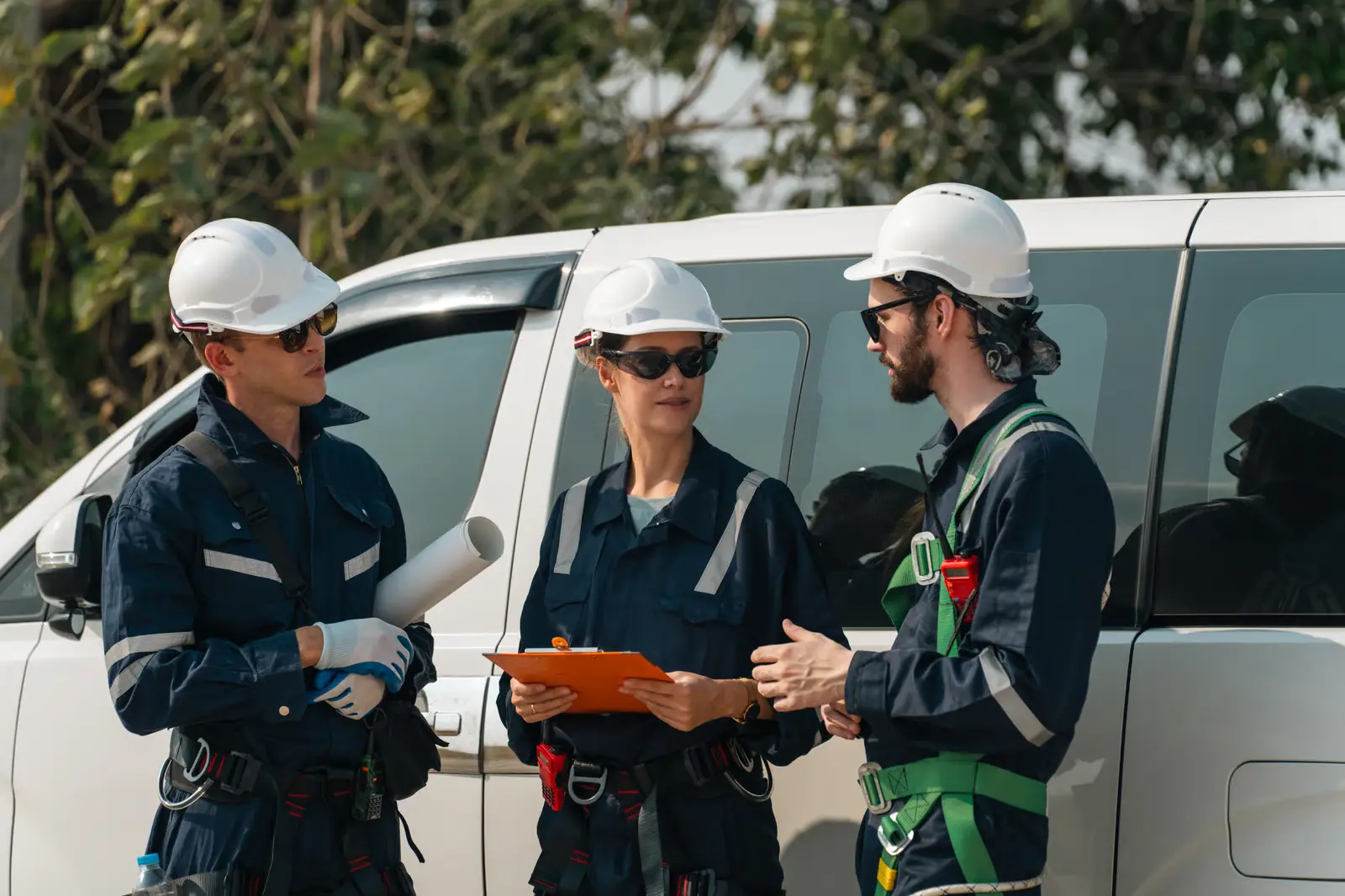
crew staging for storm restoration

Crew Staging & Resource Allocation for Storm Restoration

July 27, 2026
5 min read

Crew staging and resource allocation determine how fast a utility restores power after a major storm. Staging areas serve as the logistical hub where crews rest, refuel, and receive assignments, while resource allocation is the process of matching available linemen, vegetation crews, and materials to damage locations in the right order.  

Get either wrong, and restoration times stretch even when enough crews are on the ground.

Why Do Staging Areas Make or Break a Storm Response?

A staging area is where storm response teams rest, meet, and store equipment and materials, and utilities that plan them well get a much better handle on mobilizing resources efficiently during a chaotic event.  

Crowding too many people and too much equipment into an undersized space does little to relieve an already stressful situation, so managers need to plan for lodging, meeting space, and vehicle parking well before the storm arrives. That planning has to happen before landfall, not during it.  

Storm-ready utilities pre-stage materials, lock in vendor agreements, and coordinate transportation routes in advance, with dedicated logistics teams supporting operations leaders so materials flow lines up with restoration priorities.  

A staging site chosen after the storm has already hit is almost always the wrong site: roads may be blocked, fuel may be scarce, and crews lose hours relocating instead of restoring.

Good staging site selection typically weighs a handful of factors: proximity to the highest-damage zones without sitting inside the flood or wind-risk area itself, road access for tractor-trailers hauling poles and transformers, available acreage for crew parking and bucket trucks, and access to fuel, water, and lodging within a reasonable drive.  

Utilities running multi-state restorations often stand up several staging areas simultaneously, each covering a geographic division, which mirrors the Operations Section structure under the Incident Command System that most large restorations run under.

How Should Utilities Allocate Crews Once the Damage Picture Comes In?

Resource allocation starts with a damage estimate, and that estimate has to translate into an actual crew and materials plan. Planners need to work backward from the predicted damage and affected areas to figure out what resources are needed and where, and for a major storm that estimate needs to be as accurate as possible, since misallocating crews to one area that doesn't need them can leave another area waiting in the dark.

This is where a lot of restorations lose time they can't get back. Assigning crews based on gut feel or outdated circuit maps, rather than live damage assessment data, means resources end up chasing yesterday's information. The utilities that recover fastest treat allocation as a living plan that gets revised every operational period, not a static assignment sheet made once at the start of the storm.

An ideal and a practical allocation sequence looks like this:

  1. Triage by criticality. Hospitals, water treatment plants, and other critical infrastructure get priority regardless of customer count.
  1. Restore the trunk before the branches. Transmission and substation repairs that bring large blocks of customers back online happen before individual service drops.
  1. Match crew type to damage type. Downed trees need vegetation crews before line crews can safely work; broken poles need pole-setting crews before wire crews.
  1. Reassign as conditions change. New damage reports, weather updates, and completed work all shift priorities, so the plan has to be able to move crews mid-shift, not just at shift change.

Utilities that build this cadence into their storm response plan ahead of the season spend less time improvising when the outages actually start rolling in.

What Role Does Mutual Aid Play in Resource Allocation?

No utility staffs its workforce to handle the worst storm it could face. That gap is filled by mutual aid, where a utility that knows its own crews and equipment won't be enough calls for help, provides its best estimate of the people and skills it needs along with equipment and material requirements, and other utilities in the network respond with what they can offer. Regional and national mutual aid coordinators, working as volunteers through organizations like the American Public Power Association, handle the actual dispatch and movement of crews between utilities.

Mutual aid used to be a slower, more manual process, but that has changed. Mutual assistance programs have become highly standardized and digitally coordinated compared to the ad-hoc responses utilities relied on in past decades, and recent major storms have shown that modern regional mutual assistance group coordination now reaches new levels of efficiency through AI-powered logistics platforms that route the right resources to exactly where they are needed.

The catch is that mutual aid crews arrive without local system knowledge. Utilities that skip a thorough orientation lose the speed advantage mutual aid is supposed to provide, because crews unfamiliar with local circuits work more cautiously and make more calls back to base for clarification.

This is also where verified crew credentials and rostering matter. Contractors and mutual aid crews that arrive with documentation already validated can be assigned to staging areas and divisions immediately, rather than waiting on paperwork. For utilities managing large incoming rosters, a mobile-first roster system keeps reassignments moving even when crew leaders are working from a truck cab instead of an office.

How Do You Prevent Crew Burnout While Maximizing Restoration Speed?

Resource allocation isn't just about deploying enough crews. It's about deploying them in a way that doesn't run them into the ground halfway through the restoration. Under normal conditions, utilities want to throw every available resource at outages as they come in, but during a major event they need to shift into damage assessment mode, pulling people back to rest so they can figure out where outages actually are and prioritize accordingly. Crews can run for 18 to 20 hours, but after that they are spent, and customers expect their power back once the sun comes up.

That tension, between restoring power fast and keeping crews fit to work safely, is exactly why crew fatigue rules exist and why staging plans need to build in rotation, not just deployment. A staging area without adequate rest space just moves the fatigue problem instead of solving it.

Applied to crew allocation, that means staging area managers, logistics coordinators, and division supervisors all need a trained backup who can step in without the whole operation stalling.

What Should Utilities Track to Know If Allocation Is Working?

Real-time visibility is what separates an allocation plan on paper from one that actually works in the field. Utilities need to know, at any moment, where every crew is, what they've completed, what they're assigned to next, and how close they are to fatigue limits. Without that visibility, the Planning Section is guessing, and the next operational period's assignments end up built on stale information.

This is where tools like KYRO AI's StormShield close the gap between the paper plan and the field reality, giving utilities and contractors a shared view of crew locations, job status, and staging capacity in one system instead of a patchwork of radio calls and spreadsheets. That same visibility feeds directly into the storm readiness metrics utilities track season over season, and into the first 24 hours of outage management, when allocation decisions carry the most weight.

FAQ

How many staging areas does a major storm restoration need?  

It depends on the size of the affected territory. Localized storms may run on one central staging area, while hurricanes affecting multiple states typically require several regional sites, each supporting a geographic division of the restoration.

What's the biggest mistake utilities make in resource allocation?  

Allocating crews based on outdated damage reports instead of continuously updated field data. Storms evolve fast, and an allocation plan that isn't revised every operational period quickly falls out of sync with where the actual damage is.

How do mutual aid crews get integrated into staging and allocation?  

Through orientation and system familiarization, typically covering circuit maps, safety protocols, and local hazards, followed by assignment into divisions or groups alongside the utility's own crews under the incident command structure.

What's the ideal rest-to-work ratio for storm crews?  

Guidance varies by utility, but field experience generally points to crews being effective for roughly 18 to 20 hours before fatigue starts compromising both safety and productivity, which is why staging plans need to build in scheduled rotation.

Crew Staging & Resource Allocation for Storm Restoration

July 27, 2026
5 min read
July 28, 2026
Rabiya Farheen
Content Strategist
Author
Rabiya Farheen
Content Strategist

Crew staging and resource allocation determine how fast a utility restores power after a major storm. Staging areas serve as the logistical hub where crews rest, refuel, and receive assignments, while resource allocation is the process of matching available linemen, vegetation crews, and materials to damage locations in the right order.  

Get either wrong, and restoration times stretch even when enough crews are on the ground.

Why Do Staging Areas Make or Break a Storm Response?

A staging area is where storm response teams rest, meet, and store equipment and materials, and utilities that plan them well get a much better handle on mobilizing resources efficiently during a chaotic event.  

Crowding too many people and too much equipment into an undersized space does little to relieve an already stressful situation, so managers need to plan for lodging, meeting space, and vehicle parking well before the storm arrives. That planning has to happen before landfall, not during it.  

Storm-ready utilities pre-stage materials, lock in vendor agreements, and coordinate transportation routes in advance, with dedicated logistics teams supporting operations leaders so materials flow lines up with restoration priorities.  

A staging site chosen after the storm has already hit is almost always the wrong site: roads may be blocked, fuel may be scarce, and crews lose hours relocating instead of restoring.

Good staging site selection typically weighs a handful of factors: proximity to the highest-damage zones without sitting inside the flood or wind-risk area itself, road access for tractor-trailers hauling poles and transformers, available acreage for crew parking and bucket trucks, and access to fuel, water, and lodging within a reasonable drive.  

Utilities running multi-state restorations often stand up several staging areas simultaneously, each covering a geographic division, which mirrors the Operations Section structure under the Incident Command System that most large restorations run under.

How Should Utilities Allocate Crews Once the Damage Picture Comes In?

Resource allocation starts with a damage estimate, and that estimate has to translate into an actual crew and materials plan. Planners need to work backward from the predicted damage and affected areas to figure out what resources are needed and where, and for a major storm that estimate needs to be as accurate as possible, since misallocating crews to one area that doesn't need them can leave another area waiting in the dark.

This is where a lot of restorations lose time they can't get back. Assigning crews based on gut feel or outdated circuit maps, rather than live damage assessment data, means resources end up chasing yesterday's information. The utilities that recover fastest treat allocation as a living plan that gets revised every operational period, not a static assignment sheet made once at the start of the storm.

An ideal and a practical allocation sequence looks like this:

  1. Triage by criticality. Hospitals, water treatment plants, and other critical infrastructure get priority regardless of customer count.
  1. Restore the trunk before the branches. Transmission and substation repairs that bring large blocks of customers back online happen before individual service drops.
  1. Match crew type to damage type. Downed trees need vegetation crews before line crews can safely work; broken poles need pole-setting crews before wire crews.
  1. Reassign as conditions change. New damage reports, weather updates, and completed work all shift priorities, so the plan has to be able to move crews mid-shift, not just at shift change.

Utilities that build this cadence into their storm response plan ahead of the season spend less time improvising when the outages actually start rolling in.

What Role Does Mutual Aid Play in Resource Allocation?

No utility staffs its workforce to handle the worst storm it could face. That gap is filled by mutual aid, where a utility that knows its own crews and equipment won't be enough calls for help, provides its best estimate of the people and skills it needs along with equipment and material requirements, and other utilities in the network respond with what they can offer. Regional and national mutual aid coordinators, working as volunteers through organizations like the American Public Power Association, handle the actual dispatch and movement of crews between utilities.

Mutual aid used to be a slower, more manual process, but that has changed. Mutual assistance programs have become highly standardized and digitally coordinated compared to the ad-hoc responses utilities relied on in past decades, and recent major storms have shown that modern regional mutual assistance group coordination now reaches new levels of efficiency through AI-powered logistics platforms that route the right resources to exactly where they are needed.

The catch is that mutual aid crews arrive without local system knowledge. Utilities that skip a thorough orientation lose the speed advantage mutual aid is supposed to provide, because crews unfamiliar with local circuits work more cautiously and make more calls back to base for clarification.

This is also where verified crew credentials and rostering matter. Contractors and mutual aid crews that arrive with documentation already validated can be assigned to staging areas and divisions immediately, rather than waiting on paperwork. For utilities managing large incoming rosters, a mobile-first roster system keeps reassignments moving even when crew leaders are working from a truck cab instead of an office.

How Do You Prevent Crew Burnout While Maximizing Restoration Speed?

Resource allocation isn't just about deploying enough crews. It's about deploying them in a way that doesn't run them into the ground halfway through the restoration. Under normal conditions, utilities want to throw every available resource at outages as they come in, but during a major event they need to shift into damage assessment mode, pulling people back to rest so they can figure out where outages actually are and prioritize accordingly. Crews can run for 18 to 20 hours, but after that they are spent, and customers expect their power back once the sun comes up.

That tension, between restoring power fast and keeping crews fit to work safely, is exactly why crew fatigue rules exist and why staging plans need to build in rotation, not just deployment. A staging area without adequate rest space just moves the fatigue problem instead of solving it.

Applied to crew allocation, that means staging area managers, logistics coordinators, and division supervisors all need a trained backup who can step in without the whole operation stalling.

What Should Utilities Track to Know If Allocation Is Working?

Real-time visibility is what separates an allocation plan on paper from one that actually works in the field. Utilities need to know, at any moment, where every crew is, what they've completed, what they're assigned to next, and how close they are to fatigue limits. Without that visibility, the Planning Section is guessing, and the next operational period's assignments end up built on stale information.

This is where tools like KYRO AI's StormShield close the gap between the paper plan and the field reality, giving utilities and contractors a shared view of crew locations, job status, and staging capacity in one system instead of a patchwork of radio calls and spreadsheets. That same visibility feeds directly into the storm readiness metrics utilities track season over season, and into the first 24 hours of outage management, when allocation decisions carry the most weight.

FAQ

How many staging areas does a major storm restoration need?  

It depends on the size of the affected territory. Localized storms may run on one central staging area, while hurricanes affecting multiple states typically require several regional sites, each supporting a geographic division of the restoration.

What's the biggest mistake utilities make in resource allocation?  

Allocating crews based on outdated damage reports instead of continuously updated field data. Storms evolve fast, and an allocation plan that isn't revised every operational period quickly falls out of sync with where the actual damage is.

How do mutual aid crews get integrated into staging and allocation?  

Through orientation and system familiarization, typically covering circuit maps, safety protocols, and local hazards, followed by assignment into divisions or groups alongside the utility's own crews under the incident command structure.

What's the ideal rest-to-work ratio for storm crews?  

Guidance varies by utility, but field experience generally points to crews being effective for roughly 18 to 20 hours before fatigue starts compromising both safety and productivity, which is why staging plans need to build in scheduled rotation.

Rabiya Farheen
Content Strategist

Rabiya Farheen is a content strategist and a writer who loves turning complex ideas into clear, meaningful stories, especially in the world of utility, tech, AI, and B2B SaaS. She works closely with growing teams to create content that doesn’t just check SEO boxes, but actually helps people understand what a product does and why it matters. With a knack for research and a curiosity that never quits, Rabiya dives deep into industry trends, customer pain points, and data to craft content that feels super helpful and informative. When she’s not writing, she’s probably reading, painting, and exploring her creative side— or you'll find her hustling around for social causes, especially those that empower girls and women.

Discover more related blogs.