

Features
Industries
Who we serve
Resources
Sign in
Get Started - $500/month
No commitment. No implementation fee. Unlimited users. Cancel anytime
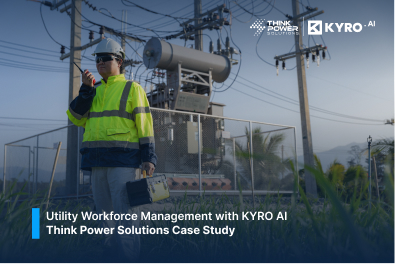
Think Power Solutions is about a 500 person utility inspection services company operating across 16 states. Its field teams provide inspection and field services to utilities including Duke Energy, AEP Oncor, CenterPoint Energy, SDG&E, PG&E, SCE, DTE, and others.
Since 2022, Think Power has run those operations on KYRO AI. Crews work from iPads in the field to file daily reports, safety documentation, truck inspections, job hazard analyses and shareable moment captures. The same platform handles timesheets, expenses, payroll integration and operational dashboards. KYRO AI currently serves all their 500 employees, enterprise wide.
What makes this stand out is how the company handled growth. Through two acquisitions resulting in three sets of operating rules, Think Power scaled without ever needing to re-platform.
During their time on KYRO, Think Power acquired two companies. Neither acquisition triggered a system rebuild.
KYRO AI runs these three companies with three different operating patterns as a multi-tenant deployment. Each organization keeps its own rules, workflows and reporting. At the same time, Think Power leadership maintains full visibility across the whole picture.
When Pride came aboard, the user experience for Think Power and LTSI did not change at all. Pride did not have to bend its processes to match the others.
This answers a critical scalability question for utility workforce management software. Instead of asking if a system can handle a certain volume of users, companies should ask what happens when the organizational chart changes. For Think Power, the answer was simple configuration instead of a total rebuild. That level of configurability is felt by the field teams as well.

Watch: Jakiilor Bingham on building field-to-office visibility with KYRO
The hardest version of this test was onboarding Pride Resource Partners. Pride is a California company, and California payroll requires its own specific discipline. Overtime and double time calculate daily rather than weekly. A seventh consecutive day triggers its own specific treatment. A missed meal break owes a penalty hour. KYRO AI encoded all of these rules specifically for Pride, while every other organization on the deployment kept their weekly rules. A working pilot account was live in less than two weeks.
Read the Pride Resource Partners case study →
Timesheets approved in KYRO AI flows directly to payroll through Think Power's Paylocity integration.
Every entry is categorized at the source. Each time log carries an activity code from Think Power's own coding structure, along with duration, miles and per diem where applicable. KYRO generates a custom payroll report built around Think Power's rules and exceptions, which then uploads to Paylocity. Hours land in payroll already sorted into the right categories with the compliance checks already completed.
Each person owns their own timesheet. Supervisors approve them, and the exception rules fire before anything reaches the payroll file.
Expenses follow the same strict discipline. KYRO's AI validates entered data against the actual receipt. Any discrepancies route back to the employee and supervisor before approval. For the people doing the approving, the major benefit is having the review and the context on the same screen.

Approvers can query an entry without leaving the timesheet. A request goes back to the person who submitted the time, they fix it, and it returns for approval. Downstream, the billing team simply pulls the reliable data straight from KYRO to bill the client.
Watch (2 min): Donovhan Calvillo on automated timesheets for utility field operations
Running through all of these processes is KORY, KYRO's AI agent. Behind the scenes, it acts as the intelligence layer. It reads the receipts behind every expense and validates the entered data against them. It also powers the exception rules that check Think Power's timesheets against the specific travel, break and overtime requirements of each contract before payroll runs.
In front of the user, KORY operates as a chat interface. A manager can create a project just by describing it. They can ask for a report on their direct reports or their team's time, and KORY builds it from the live data.
The pattern remains consistent. KORY does the reading, matching, checking and assembling, and a human makes the final decision. Across three organizations and 16 states, that amounts to thousands of small verifications every pay period that no one has to do by hand. KORY is engineered to be secure, your actions are always supervised and every decision is taken with a human in the loop.
Check KORY’s Security and Governance Policies ->
Timesheets are just one thread of a much wider deployment.
For Think Power Solutions, project requests come in through KYRO AI forms. Admins stand up projects with billing details, and field managers assign their teams. Field data captured on iPads generates reports that are emailed to stakeholders and fed into internal and client dashboards. The project file share keeps specifications, handbooks and training documents current. Users can mark up and redline documents directly from the iPad. Think Power's OneDrive integrates with KYRO AI so folder structures stay perfectly consistent.
Field crews do not always have a cellular signal. Think Power has employees working in remote locations who capture their work offline and submit it once they are back in range.

Watch: Donovhan Calvillo on improving field operation efficiency with KYRO
A utility company needs more than software that works on day one. It needs software that absorbs change. That means handling new companies, new states, new labor rules and new contracts. Each contract comes with its own travel pay, break rules and overtime math. Most platforms handle that kind of change as a massive project. KYRO handles it as a simple configuration.
Four years in, the deployment runs three companies across 16 states for about 500 users. California's strictest wage and hour rules are live in production right alongside standard weekly rules for everyone else. Field data, timesheets, expenses and payroll all sit in one single place, and KORY checks the work before a person signs it off.
Think Power has not re-platformed a single time in those four years. For a company whose organizational chart keeps changing, that is the most important metric.

If you are weighing up a workforce platform for utility or field services work, join our live session. We walk through the exact path Think Power runs every pay period: field capture on iPads, timesheets and expenses, KORY's exception checks, and the payroll file that lands in Paylocity already categorized. Click here and Register for the webinar.
What does Think Power Solutions use KYRO for?
Daily field reports, safety documentation, truck inspections, job hazard analyses and shareable moment captures from iPads in the field. It also handles timesheets, expenses, payroll integration and operational dashboards. Project requests, project file share and document markup run on it too.
How many users does Think Power have on KYRO?
There are about 500 user accounts across the deployment, spanning 16 states. Think Power has been on KYRO since 2022.
Can one platform run multiple companies after an acquisition?
Yes. KYRO runs Think Power, LTSI and Pride Resource Partners as a multi-tenant deployment. Each organization keeps its own rules, workflows and reporting, while Think Power leadership sees the whole picture. When Pride was onboarded from California, the user experience for Think Power and LTSI did not change.
How does KYRO connect to payroll?
Approved time flows to payroll through a Paylocity integration. Each time log carries an activity code from Think Power's own coding structure, plus duration, miles and per diem where they apply. KYRO generates a custom payroll report around Think Power's rules and exceptions and uploads it to Paylocity. Hours arrive already categorized with compliance checks run.
What is KORY?
KORY is KYRO's AI agent. Behind the scenes, it validates expense entries against the actual receipts and powers the exception rules that check timesheets against each contract's travel, break and overtime requirements before payroll runs. In front of the user it is a chat interface. A manager can create a project by describing it or ask for a report and get it built from live data.
Does KYRO work offline in remote field locations?
Yes. Think Power has field employees working in remote locations. They do their work offline and submit it later. Jakiilor Bingham describes this as a must for the organization.

.jpg)
.jpeg)