

Features
Industries
Who we serve
Resources
Sign in
Get Started - $500/month
No commitment. No implementation fee. Unlimited users. Cancel anytime
%20(1).webp)
Storm work can be some of the busiest and most demanding work a lineman takes on.
When a hurricane, ice storm, tornado or major wind event damages the grid, utilities may need additional crews quickly. That can mean opportunities for linemen who are qualified, available, and willing to travel.
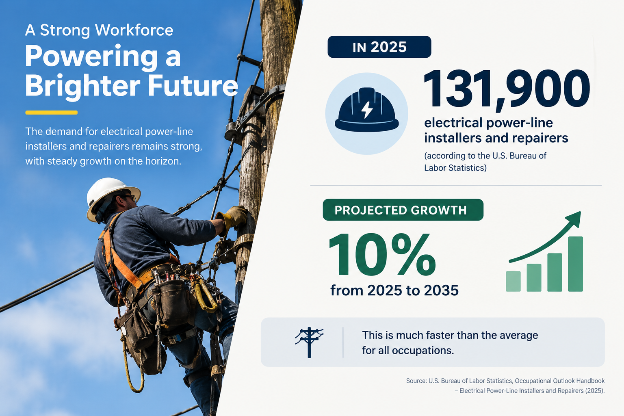
And the demand for linemen is huge. The U.S. Bureau of Labor Statistics reports that there were about 131,900 electrical power-line installers and repairers in 2025, with employment projected to grow 10% from 2025 to 2035. BLS also notes that line workers may need to travel to areas affected by storms and other disasters and work long hours for several days in a row.
In 2024, U.S. electricity customers experienced an average of nearly 11 hours of power interruptions, almost twice the average of the previous decade. Hurricanes Beryl, Helene, and Milton alone accounted for 80% of the hours without electricity attributed to major events that year. This reiterates the need for restoration crews and how their demand can spike up quickly.
So, how do you find legitimate storm work without wasting time on vague listings, outdated rosters, or calls that don't give you enough information to make a decision?
This guide breaks down where to look, what to verify, and how to identify legitimate storm-work opportunities before you commit.
A storm restoration lineman helps repair electrical infrastructure damaged by severe weather and restore power to affected customers.
The work can involve:
The exact work depends on the type and severity of the storm.
A hurricane may leave behind widespread distribution of damage across several counties or states. An ice storm can bring down lines and poles through accumulated weight. Tornadoes can create concentrated areas of severe damage.
Storm restoration is also different from routine linework. You may be working in unfamiliar territory, under another utility's procedures, with changing priorities and long shifts.
BLS (U.S. Bureau of Labor Statistics) notes that linework is already a physically demanding job, with risks like high-voltage electricity and working at heights. When a storm or natural disaster hits, linemen may also need to travel to affected areas and work long hours to help restore power.
Legitimate storm work is a real restoration assignment offered by an identifiable utility, contractor, union networks, or other authorized organization involved in storm response.
These assignments have a clear employer, work location, job scope, pay terms, reporting instructions, and required qualifications.
For linemen, knowing how to verify these details helps avoid unreliable job offers and wasted travel while finding genuine opportunities during storm response.
Finding legitimate storm work can be tricky. Opportunities can come from contractors, utilities, unions, referrals, rosters, or storm-call platforms. From these, you need to find the right call, from a legitimate source, with enough information to know what you're signing up for.
Here are some of the reasons why finding legitimate storm work for linemen can be difficult:
1. Storm hiring happens quickly
After a major storm, utilities need additional crews almost immediately. Job openings can appear and disappear within hours as restoration needs change. By the time a lineman finds a posting, the crew may already be filled.
2. Jobs are spread across different channels
There isn't one central place for every storm job. Linemen may need to check contractor websites, job boards, union and IBEW contacts, Facebook groups, personal networks, storm rosters, and direct calls from contractors.
3. It can be hard to tell who is actually hiring
If a post is mentioning “storm crews needed” it doesn't tell you whether the person posting it is the actual contractor, a recruiter, a subcontractor, or simply passing along information. You may have to verify the company and assignment before making travel arrangements.
4. The job details may be incomplete
Some storm calls provide little more than a location and a start date. Linemen still need to know the classification, hourly rate, overtime, per diem, lodging, reporting location, expected duration, and type of work.
5. Crew requirements change during restoration
A contractor may initially need 20 lineworkers and then need fewer—or suddenly need more specialized crews. Work can also shift from one area to another as damage assessments come in.
6. Qualifications matter
Storm restoration isn't simply about finding people who are available. The contractor may need specific classifications, experience, certifications, equipment operators, or crews capable of performing particular types of work. That makes generic job listings less useful.
7. Travel makes bad information expensive
For a local job, a misleading listing might cost you an hour. For storm work, you could spend money on fuel, flights, accommodation, and food before discovering that the assignment isn't what you expected.
8. Legitimate opportunities can be buried in informal networks
Some of the fastest storm opportunities travel through people who already work in the industry. If you're not connected to the right contractor, union local, utility network, or storm roster, you may hear about the opening late.
Before you pack your gear and travel, make sure you have the basic details of the storm job. You should know who you're working for, where you're going, what you'll be doing, and what to expect.
Know who is contacting you. It could be a utility contractor, storm contractor, staffing organization, or another company supporting the restoration effort.
Get the company name, contact person's name, phone number or email, and available company information. If possible, find out which utility or contractor the company is working for.
If you can't verify who is offering the job, take a step back before agreeing to travel.
A storm call should give you a specific reporting location or, at minimum, a clear area of deployment.
Ask for the city, utility territory, staging yard, or reporting point. If you receive an incomplete message saying “storm work available in Florida” it isn't enough when you are preparing to drive hundreds of miles.
Also ask whether the reporting location could change after you arrive.
Make sure you know what position you are being hired for and whether it matches your experience and qualifications.
The call might be for a:
Different assignments can have different qualification requirements. Confirm what the contractor expects before you leave.
Don't assume all storm jobs pay the same way.
Ask about the hourly rate, overtime, double time where applicable, per diem, travel pay, lodging, and other expenses. Get the terms clearly discussed before you start traveling.
If the compensation changes after you arrive, clarify the reason and confirm the new terms before continuing.
Storm restoration can change quickly. Still, you should have a reasonable idea of what you're signing up for.
Confirm:
A deployment might last a few days or several weeks depending on the damage and restoration workload.
If you are traveling out of state, find out who covers transportation, lodging, meals, and other expenses.
Also ask what you need to bring. Depending on the assignment, this could include PPE, tools, a vehicle, CDL or other licenses, certifications, identification, and employment documentation.
Storm hiring is often urgent, but urgency shouldn't replace basic verification. Be cautious when a supposed employer:
One red flag doesn’t always mean a job is a scam. Storm response can move quickly, and some details may not be available right away. What matters is whether the employer can answer your questions and give you enough information to verify the job.
There isn't one place where every storm call appears. Most linemen use a combination of job boards, contractor networks, union channels, rosters, and storm-response platforms.
.webp)
Specialized Lineman job boards can be a good starting point when you are actively looking for storm work opportunities.
These are useful when you want to search for opportunities yourself rather than wait for a contractor to contact you.
Many storm opportunities come directly from utilities and line contractors that regularly perform distribution, transmission, and restoration work.
If you've worked with a contractor before, staying connected can also put you closer to future storm deployments.
For union linemen, local IBEW channels can be considered as another route to storm work opportunities. The exact process depends on the local, the contractor, and the assignment.
Check your local's current procedures rather than assuming every IBEW storm call works the same way.
Storm rosters let linemen make their availability and qualifications visible to contractors before a major event occurs.
A roster is treated as a visibility tool, not a guaranteed job. Being listed doesn't mean you'll automatically receive a call.
These platforms are built specifically to connect utilities and contractors with available storm crews/linemen, manage storm callouts, and coordinate crew availability during emergency restoration work. It prevents relying entirely on spreadsheets, phone lists, and individual messages.
KYRO AI’s Storm Call Center helps linemen discover storm work opportunities across the U.S.
It shares predicted storm details by state and lets linemen opt in to receive notifications when a storm becomes active, or outages are confirmed. Lineman profiles are stored in KYRO AI’s database, making it easier to contact available crews for future storm events.
If you are actively looking for storm work, don't rely on just one source. Keep your profile and qualifications current on relevant job boards or rosters, stay connected with contractors and your union network, and verify every storm call before traveling.
That gives you more ways to hear about legitimate opportunities while reducing your dependence on a single channel.
If you wait until a storm turns into a major restoration event, you may already be behind crews that started preparing days earlier.
A better move is to keep an eye on storms that could turn into major events and get yourself ready before the calls start coming in.
Here are a few things you can do to prepare early and improve your chances of landing storm linework before the storm hits:
Different channels work differently to find linemen storm jobs.
The common problem is that most of these methods require you to actively search, maintain relationships, or wait for someone to contact you.
A platform that combines storm visibility with your worker profile can make that process more proactive.
KYRO AI’s Storm Call Center is designed around a simple problem:
How do linemen know where storm opportunities may develop? And how do linemen make sure contractors can reach out to them when they need storm crews?
Instead of relying only on job boards or individual contacts, linemen can use KYRO AI’s Storm Call Center to monitor storm activity and make their information available for contractor storm calls.
The process has two parts.
It displays predicted storms by state on the web and app.
Live storms are available in the app.
This gives traveling linemen a way to see storm activity developing across the U.S. rather than limiting their search to their home location.
Linemen can add their details directly to KYRO AI’s database.
Once your information is there, you don't have to start from scratch every time a storm develops.
When a contractor sends a storm call through KYRO AI, the platform can reach out to workers in its database for that opportunity.
The workflow is straightforward.
.webp)
If you're open to traveling, you can monitor states beyond your immediate area.
If the storm becomes live or outages are confirmed, you'll receive a notification without having to manually check the same storm.
Keep your information current so you can be contacted when storm crews are needed.
You can review the storm and job details before deciding whether to opt in.
KYRO AI’s Storm Call Center makes legitimate opportunities easier to find for linemen. It helps you know what you're accepting and stay visible when contractors are building crews.
For linemen, that means having your qualifications and availability ready, monitoring where storms are developing, and using multiple channels to stay connected to storm work.
And with a platform like KYRO AI Storm Call Center, you can take a more proactive approach: watch predicted storms, get notified when they become live, keep your information in one place, and be reachable when contractors send storm calls.
Try KYRO AI’s Storm Call Center
Linemen can find storm work through contractor rosters, union channels, job boards, industry networks, and storm-call platforms.
Look for identifiable contractors, clear job locations, roles, start dates, pay terms, and contact information. Verify the details before accepting or traveling for the assignment.
Register with a utility, contractor, storm-response company, or storm-work platform that maintains a roster.
Then provide your role, experience, qualifications, location, contact details, and availability. Your information may then be reviewed and added to the roster.
When storm work becomes available, you may be contacted based on crew requirements.
Start before a storm becomes a live restoration event. Monitoring predicted storms gives you time to check your availability, prepare your documents, and travel.
Verify who is hiring, where you need to report, the role, start date, pay, overtime, travel, lodging, and expected duration. Avoid accepting a call when key details are unclear.
Storm work may involve overtime, different pay rates, per diem, or other compensation depending on the contractor and assignment. Always confirm the complete pay structure before accepting a call.
Yes. Linemen can look for storm work outside their home state by monitoring predicted storms in other areas.
Platforms such as KYRO AI Storm Call Center let linemen track storms by state and opt in to receive notifications when a storm becomes active or outages are confirmed
Check licensing, certifications, travel, lodging, and reporting requirements beforehand.
KYRO AI’s Storm Call Center lets linemen monitor predicted and live storms. You can select Notify Me for a predicted storm and add your details to KYRO's database, so contractors can reach you when they send out storm calls.
The KYRO AI Storm Call Center helps linemen identify areas across the U.S. where storm-restoration opportunities may be developing. It displays predicted storm activity by state and assigns a Storm Risk level: Low, Moderate, or High, so you can assess potential work locations before deciding where to travel.
The web version focuses on predicted storm activity rather than active calls. For live storm calls, you can use the KYRO AI app to receive updates as new opportunities become available.
The Storm Call Center is designed for linemen looking for storm-restoration work, including both union and non-union workers. It can also be useful for traveling linemen (tramps) who are willing to work outside their usual service area and want to monitor potential storm opportunities.
Storm predictions are based on sources such as OMS information, NOAA weather forecasts, and live utility data. The information is continuously refreshed to reflect changing storm conditions and utility activity.