

Features
Industries
Who we serve
Resources
Sign in
Get Started - $500/month
No commitment. No implementation fee. Unlimited users. Cancel anytime
Most utilities are already doing the work right. Crews are trained, certifications are current, safety protocols are followed in the field. The problem is rarely whether the work complies with the requirements. The problem is proving it. When a regulator, a FEMA reviewer, or an internal audit team asks for documentation, the answer almost never comes from one place. It comes from a patchwork of inboxes, shared drives, contractor submissions, and spreadsheets that someone must manually stitch together into something that looks like a complete record. The work was done correctly. The proof just wasn't captured in a way that's easy to retrieve.
This is what makes compliance expensive for utilities. Much of the expense comes from proving that the requirements were met after the work was completed. And the further the documentation lives from the actual work, the more time, money, and risk that gap creates.
The pattern is familiar to anyone who has managed field operations across multiple contractors. Credentials expire and nobody notices until a crew is already on-site, because the tracking lives in a spreadsheet that someone updates manually once a month. Timesheets are collected at the end of a pay period and reviewed days later, long after anyone can verify whether the hours matched the actual work. Safety forms get filled out in the field, but they end up in a folder on a shared drive where they sit until someone specifically goes looking for them. Expense receipts are submitted in bulk, disconnected from the timesheets and work orders they relate to, so reconciliation becomes its own weekly project.
None of these problems happen because people are careless. They happen because the systems used to do the work and the systems used to document the work are separate. Every time someone finishes a task in one tool and then logs the proof of it in another, there's a gap. That gap is where expired credentials, unverified timesheets, and missing documentation live and that's where audit risk builds up quietly until someone comes asking questions.
The alternative isn't more diligent record-keeping. It's building your operations so that the record is created as a natural part of doing the work. When a crew member clocks in using a GPS-verified timesheet, that timestamp and location are the compliance record. When a safety form is completed on a mobile device in the field, the geo-tag and timestamp are the proof it happened where and when it was supposed to. When a credential is uploaded during onboarding, the system tracks its expiration date and sends alerts before it lapses, without anyone having to remember to check.
This is what "compliance by design" actually means in practice. You're not adding a documentation layer on top of your operations. You're using a system where doing the work and documenting the work are the same action. The audit trail isn't something you build when the auditor calls. It already exists because every step of the process was captured as it happened.
And this doesn't have to mean replacing every tool you use at once. Even if you start with one part of the workflow, like credential tracking or timesheet verification, that piece becomes audit-ready from day one. You can expand into other areas as it makes sense, without needing to commit to a full platform overhaul upfront.
The idea of making compliance a byproduct of operations rather than a separate task has been gaining traction well beyond field services, and for good reason. Any industry that deals with regulated consumables, certified personnel, or documented processes faces the same structural problem: the tracking lives in a different place than the work.
An independent compounding pharmacy faced the same structural problem. Staff managed regulated consumables through end-of-day shelf counts and updated separate spreadsheets the following morning. Inventory records were already outdated by the time the updates were completed, increasing the risk of stockouts. Licenses and certifications also depended on manual checks and reminders.
After moving to a custom operational system from AnyDB, staff began scanning items during compounding, updating inventory immediately. Low-stock alerts reflected current consumption, and automated expiration reminders kept licenses and certifications up to date.
Inventory reconciliation fell from approximately three hours per week to under 30 minutes. Barcode scanning reduced manual entry and gave the team earlier visibility into potential shortages.
See how the workflow was implemented in Real-Time Pharmacy Consumables and Compliance Tracking.
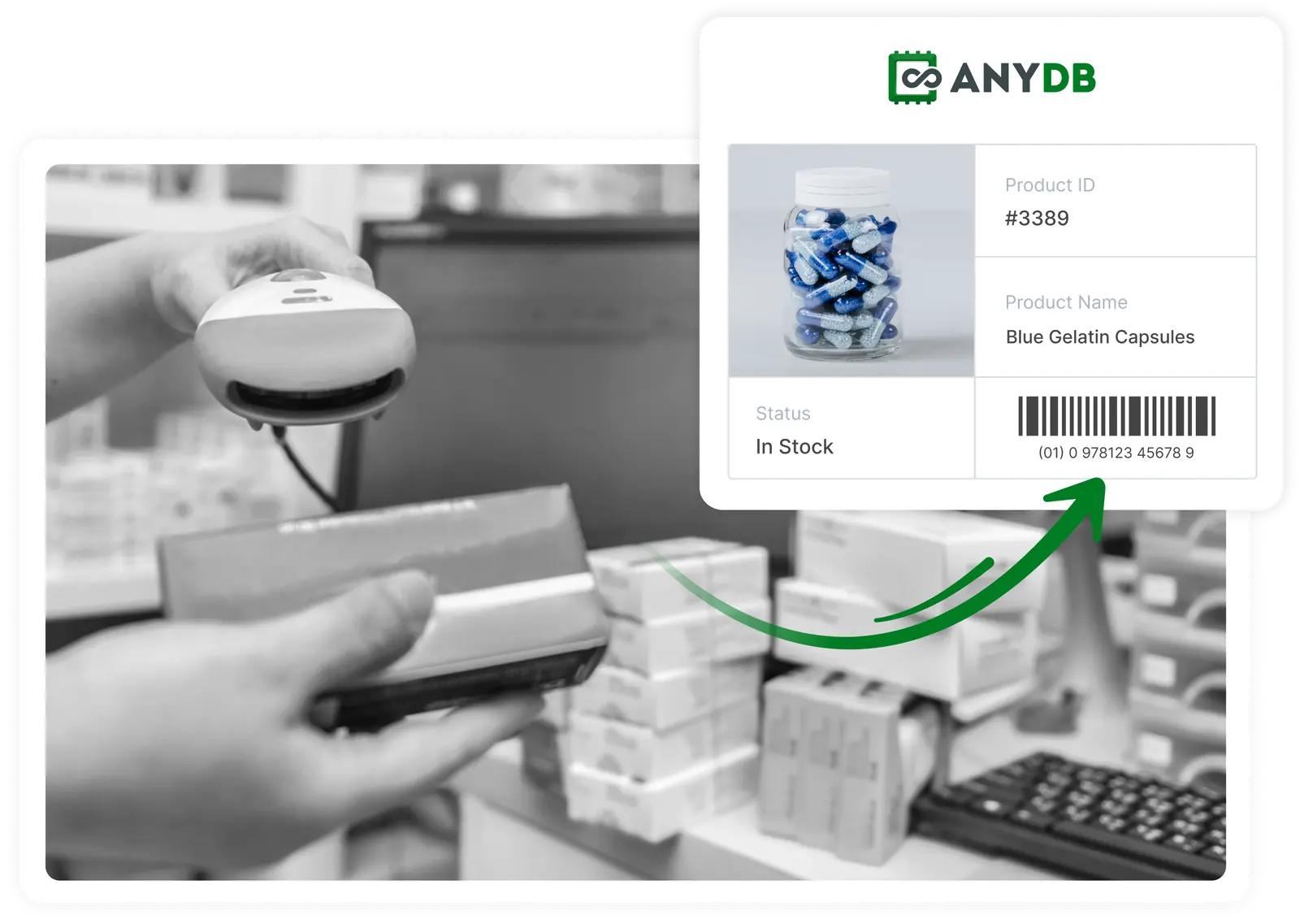
Pharmacy consumable inventory in AnyDB — barcode scanning, automatic stock updates, and built-in controlled-substance tracking keep stock levels accurate and the pharmacy audit-ready.
The same pattern appears in utilities managing contractor credentials, timesheets, safety documentation, and expense records. When evidence is captured during the work, compliance gaps can be addressed before they become audit findings.
KYRO was built around this principle for utility and infrastructure operations, where the compliance surface area is wide and the number of outside parties makes manual tracking nearly impossible at scale.
Credential verification happens through KYRO AI, which validates union cards, IBEW classifications, CDLs, OSHA certifications, drug tests, I-9s, and medical cards. Once a credential is in the system, expiry alerts go out automatically at 60, 30, and 7 days. Nobody has to remember to check. Timesheets are GPS-verified at the point of entry, so by the time they reach an approver, the location and time data are already attached. Safety forms and incident reports are completed on mobile devices in the field with timestamps and geo-tags that make them audit-ready the moment they're submitted. Expense receipts go through AI-powered validation that cross-checks them against timesheets and rate cards before they ever reach an invoice.
When a utility needs to produce a FEMA-compliant documentation package or respond to a regulatory inquiry, they're not assembling records from five different sources. They're pulling a report from the same system where the work was tracked in the first place.
A utility can start with just storm response, or just construction management, or just vegetation management, and the compliance trail for that piece is complete from the first day. As the operation grows or as other workflows move onto the platform, the audit trail grows with it, without any retroactive documentation effort.
Compliance doesn't have to be expensive, and it doesn't have to be a scramble. The cost comes from the separation between doing the work and documenting the work. Close that gap, and the audit trail takes care of itself.
The utilities and companies that figure this out early won't just pass audits more easily. They'll spend less time and money on compliance overall, because the proof was never missing in the first place.
To see how audit-ready operations work across storm response, construction, and vegetation management, register for a webinar with KYRO AI. If you're dealing with the gap between operations and documentation, AnyDB is worth a look.